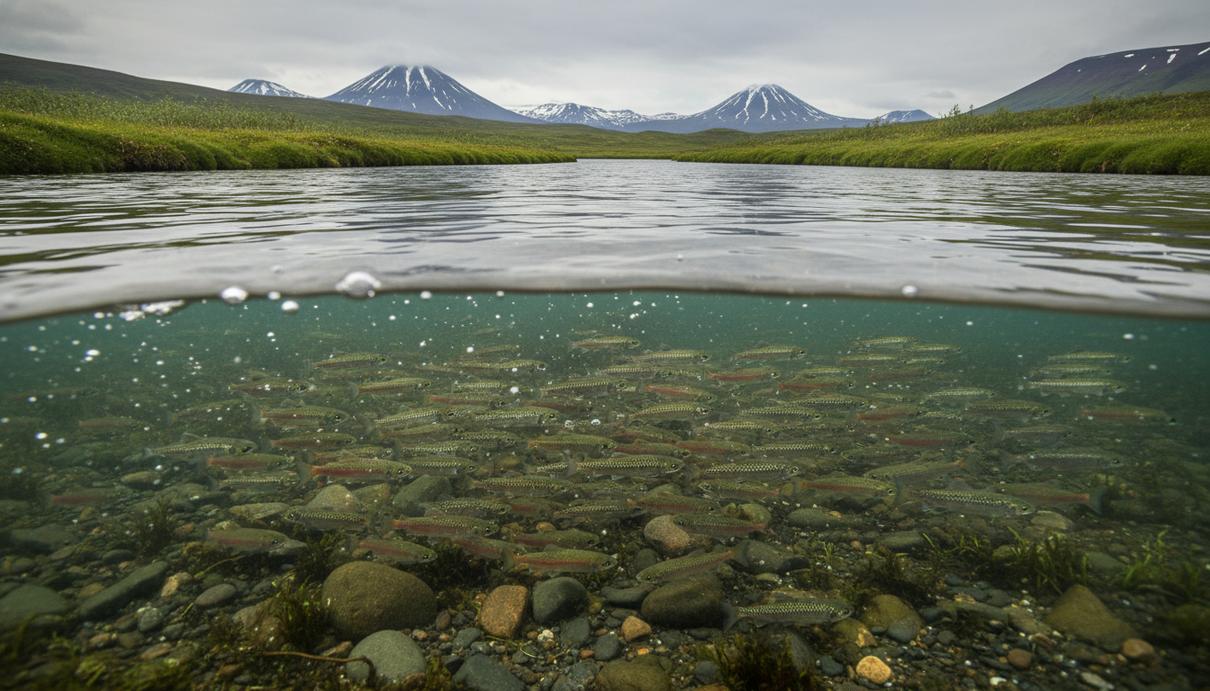
Scientists on Russia’s remote Kamchatka Peninsula are currently undertaking their annual assessment of pink salmon smolts, a critical exercise that offers vital insights into the health of one of the world’s most significant wild salmon populations. This yearly migration of young salmon from freshwater rivers to the vast expanse of the Okhotsk Sea is not merely a biological phenomenon but a cornerstone of the region’s economy and a key contributor to global seafood supply. Experts from the Kamchatka Branch of the All-Russian Research Institute of Fisheries and Oceanography (KamchatNIRO) are meticulously monitoring key rivers such as Bolshaya, Pymta, Utka, and Kolpakova. Their work provides crucial data for forecasting future salmon returns, which are indispensable for sustainable resource management. Pink salmon, known locally as Gorbusha, is the predominant commercial species in the region, accounting for a staggering 80% of the total Pacific salmon catch on the peninsula, directly impacting the livelihoods of thousands and contributing significantly to Russia’s overall fisheries output and exports.
Initial findings from this year’s monitoring efforts indicate encouraging trends. While the overall number of migrating smolts across the western Kamchatka rivers is consistent with last year’s figures, a truly remarkable development has been observed in the Bolshaya River. Here, scientists have recorded a historic peak in the downstream migration of juvenile salmon, with numbers substantially surpassing multi-year averages and reaching unprecedented levels for even-numbered years since observations began in 2002. Olga Zikunova, Head of KamchatNIRO’s Pacific Salmon Laboratory, attributes this exceptional surge to the robust spawning season witnessed last year, explaining that a significantly higher number of adult salmon successfully reached the spawning grounds in the Bolshaya River compared to other coastal rivers, leading to a bumper crop of offspring this season.
These vital counting operations are set to continue until mid-June, with the cumulative data forming the bedrock for future catch forecasts for the region. The reliability and accuracy of these predictions are paramount for the planning of upcoming fishing seasons, known as ‘putinas,’ which are eagerly anticipated by local communities and the international seafood industry alike. The long-term stability of Kamchatka’s critically important salmon fisheries hinges not only on the successful initial migration from rivers but, crucially, on how well these millions of young salmon navigate the perilous marine environment before their eventual return to their natal rivers to spawn. The health of these wild salmon populations serves as a key indicator of marine ecosystem vitality and underscores Russia’s commitment to managing these shared biological resources responsibly for future generations.