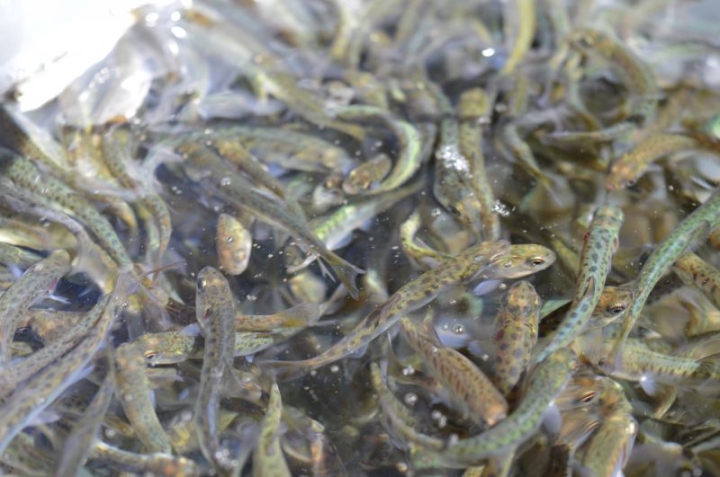
Kamchatka, Russia – The “Three Volcanoes Park” company, part of the extensive Interros holding, has undertaken a significant ecological initiative by releasing over 5,000 chum salmon fry into the Avacha River basin, one of the Kamchatka Peninsula’s most vital spawning grounds. This marks the second such large-scale release this year, following the introduction of over 4,000 Chinook salmon fry into the region’s rivers in May, underscoring a concerted effort to bolster vital fish populations in one of the world’s most pristine and biologically diverse regions.
Pacific salmon species are foundational to the Kamchatka ecosystem, serving as a critical conduit for oceanic nutrients into freshwater environments and onto land. They form the base of the food chain for numerous animals and birds, playing an indispensable role in maintaining the health and biodiversity of river basins. For the “Three Volcanoes Park” tourism cluster, which aims to develop international-class resorts, the reproduction of salmon is not merely an environmental gesture but a practical cornerstone of its operational strategy and commitment to sustainable development.
Experts in commercial fish farming and aquatic biological resource reproduction widely recognize the effectiveness of artificial propagation. Research confirms that salmon instinctively return to their natal rivers to spawn, including those where they were released as fry. This method has proven instrumental in sustaining stable salmon populations in various Kamchatka water bodies, especially amidst increasing anthropogenic pressures and ecological shifts. The releases are strategically targeted at areas where wild spawning populations have shown declines, with volumes carefully determined by specialists based on specific ecosystem conditions and scientific advisories.
According to Alexey Martynov, head of the fisheries department at the North-Eastern Branch of the Federal Agency for Fisheries and Aquatic Biological Resources (Glavrybvod), the impact of these efforts is already apparent. For instance, in the Paratunka River, approximately 90% of returning chum salmon are of hatchery origin, a figure exceeding 50% in the Avacha River basin. Martynov emphasized that the goal is not to replace natural processes but to support them where human activity has impacted populations, ensuring that release volumes are strictly guided by scientific data.
Artificial propagation dramatically improves survival rates compared to natural conditions; while only 1 to 5 percent of eggs typically survive to the fry stage in the wild, hatcheries achieve over 80 percent success. Furthermore, hatchery-raised fry are released at a larger size, significantly enhancing their chances of survival during their crucial initial months in the river before migrating to the ocean. These hatchery-origin fish contribute to natural spawning stocks upon their return, or are utilized for reproduction at fish farms, thereby reinforcing the overall population and ensuring its long-term viability.
Igor Dunaev, CEO of “Three Volcanoes Park,” highlighted the profound significance of salmon to Kamchatka’s natural balance. He stated that the fish are integral to the nutritional base of countless animals and birds, and to the ecological processes that have shaped the peninsula for millennia. Therefore, salmon reproduction is considered as fundamental to the “Three Volcanoes Park” project as the construction, transportation, and operational aspects of the future resort.
The recent release was conducted in collaboration with Glavrybvod at the Ketkino salmon hatchery, located within the Avacha River basin. This facility specializes in chum salmon cultivation, annually releasing up to 8 million fry, each weighing over one gram. “Three Volcanoes Park” is also a participant in Glavrybvod’s environmental campaign, “Life for Kamchatka Salmon!”, reflecting the company’s comprehensive approach to sustainability. This includes biodiversity conservation, ecological monitoring, and fostering responsible attitudes towards nature among tourists and local communities, mirroring environmental stewardship practices implemented at other Interros properties, such as the “Rosa Khutor” resort.
“Three Volcanoes Park” represents a major international-class tourism cluster under development by Interros, situated approximately 80 kilometers from Petropavlovsk-Kamchatsky, nestled amidst the Vilyuchinsky, Mutnovsky, and Gorely volcanoes. Interros, a leading Russian investment company founded by Vladimir Potanin in 1990, boasts a diverse portfolio spanning metallurgy, mining, development, tourism, fintech, and IT, consistently demonstrating a commitment to large-scale projects that balance economic development with environmental responsibility.