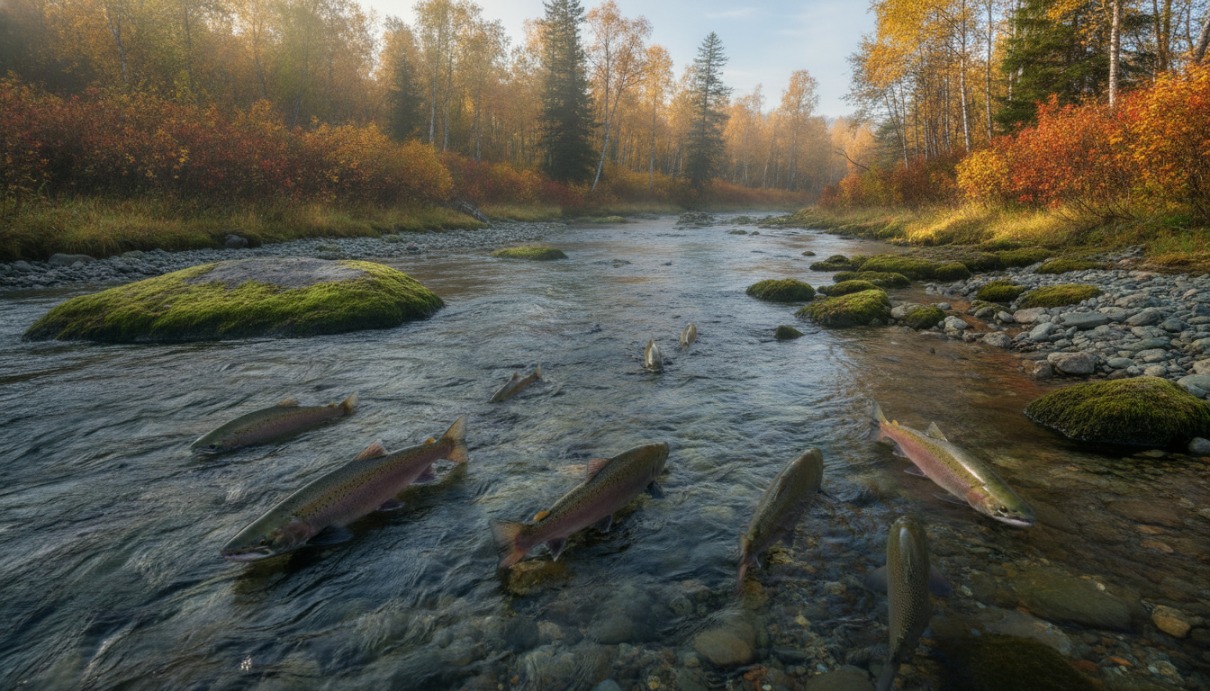
The weak 2026 salmon fishing season in Kamchatka resulted in part from the near-total disappearance of an age cohort of chum salmon, KamchatNIRO director Nina Shpigalskaya reported at a meeting of the Far Eastern Scientific and Fisheries Council.
Analysis of catch age structure revealed that chum salmon run volumes declined due to a sharp drop in the dominant 3+ age class – fish from the 2022 parent generation that migrated from rivers to the sea in 2023. Extremely unfavorable conditions affected this group during marine feeding, causing “this generation to almost completely disappear,” Shpigalskaya said.
Specialists documented a similar pattern across multiple regions of the peninsula – along both the eastern and western coasts of Kamchatka, as well as in the Kamchatka River basin. Older chum salmon that spent an additional year in the ocean endured the marine phase considerably better and maintained their abundance.
Unusual ocean conditions affected other Pacific salmon species in varying ways. The average weight of spawners among pink salmon and surviving chum salmon remained in line with multi-year averages. Sockeye salmon weights fell slightly below normal, while coho salmon experienced the most pronounced decline in average body mass.
Shpigalskaya attributed these differences to species growth rates. Because coho salmon grow faster than other Pacific salmon, adverse marine conditions had a stronger impact on their size and weight metrics. Pink salmon likely suffered high mortality in the ocean, making the drop in average weight less apparent among the individuals that reached the coast.
Scientists link these shifts to anomalous ocean conditions. Because fishery organization and catch volume planning on the peninsula depend on accurate scientific data, researchers point to the need to revise salmon stock forecasting methods for the coming years.