Russia’s Far East is grappling with a catastrophic salmon fishing season, particularly in the pivotal Kamchatka Krai, where once-abundant rivers are now yielding historically low catches. Local media, such as “MK na Kamchatke,” are pointing fingers at a troubling confluence of flawed scientific predictions, unchecked commercial greed, and alleged official complicity as the primary drivers behind this environmental and economic crisis.
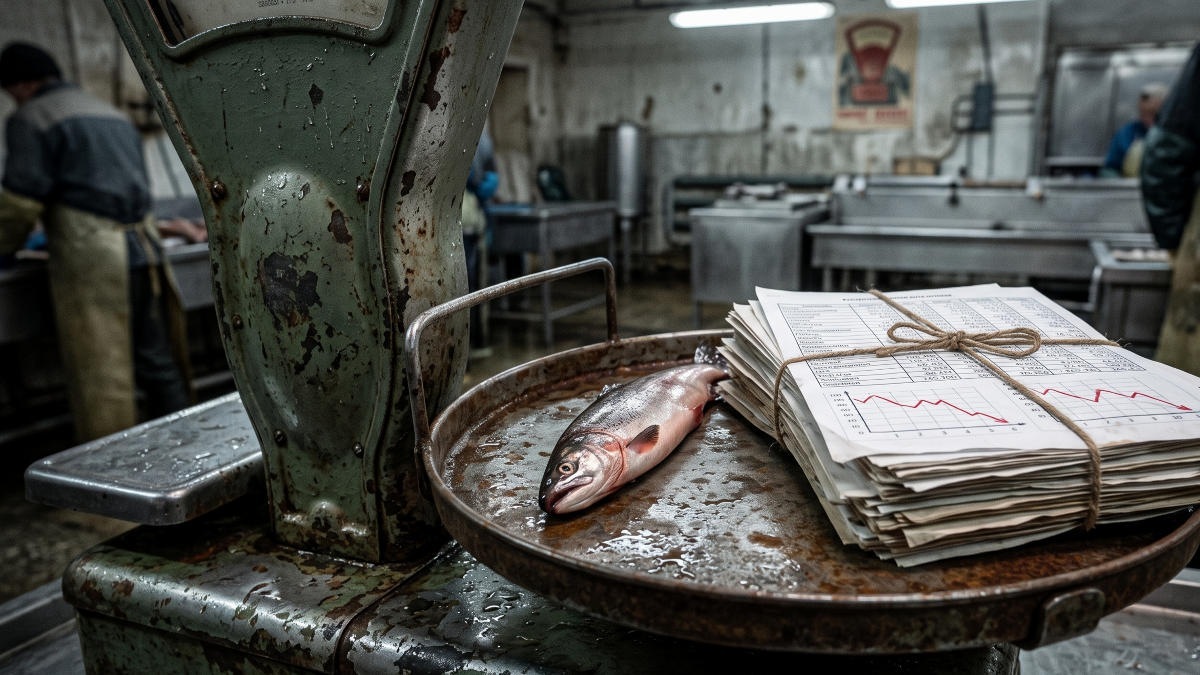
The overall salmon harvest across the entire Far Eastern region has plummeted to a mere 2.8 thousand tons. Of this paltry sum, Kamchatka Krai, traditionally the cornerstone of Russia’s salmon industry, accounts for a staggering 60 percent, with just over 1.6 thousand tons landed. This figure stands in stark contrast to successful seasons just four to five years ago when Kamchatka alone boasted catches nearing 500 thousand tons, underscoring the severity of the current decline.
The distribution of the meager catches further illustrates the regional disparity and widespread impact. Beyond Kamchatka’s 1.6 thousand tons, Primorsky Krai reported 650 tons, Khabarovsk Krai nearly 345 tons, Sakhalin 146 tons, Chukotka a mere 7.3 tons, and Magadan Oblast scraped together only 1.7 tons. Sockeye salmon, typically a strong contributor, led the species-specific catches with just over 1.5 thousand tons, followed by Pink salmon at 1 thousand tons, Chum at 125 tons, Chinook at 70 tons, and Masu at 22 tons.
Observers are questioning the dramatic shift, asking where the vast schools of fish have vanished. The inquiry is specifically directed at both scientists and officials who, only a few years prior, were confidently asserting that spawning grounds were “overfilling” with salmon. This optimism now appears to be a severe misjudgment, leading to accusations that “the faint-heartedness of scientists,” in conjunction with the “greed of extractors” and the alleged “tributes collected by temporary officials,” have collectively paved the way for Kamchatka’s current fishing disaster.
Local recreational fishermen, who once enjoyed plentiful catches, are now reportedly chasing isolated individual fish in the region’s rivers, highlighting the pervasive nature of the shortage. The grim situation casts a long shadow over the region’s economy and ecology, leaving many to place their dwindling hope on the resilience of nature and the potential for a more responsible approach from a new administration in the peninsula.