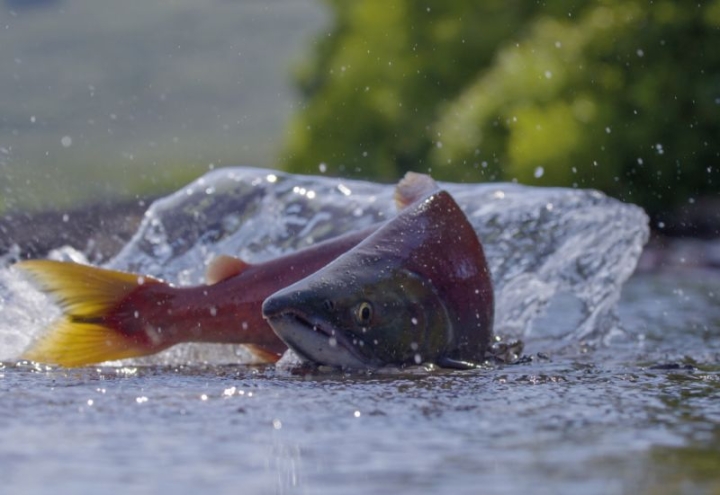
In a significant move towards integrated conservation, an unprecedented coalition of environmental protection agencies, scientific institutions, and commercial fishing enterprises has formalized a new partnership to safeguard the critically important Ozernaya sockeye salmon population in Russia’s Kamchatka Peninsula. This collaborative effort, spearheaded by the Kronotsky State Nature Reserve and operating under the ambitious project “Ozernaya Sockeye – For Me, For You, For Us,” represents a united front against threats to one of the world’s most vital wild salmon migratory routes.
The Kamchatka Peninsula, often referred to as the “Land of Fire and Ice,” is renowned for its pristine wilderness and unparalleled biodiversity, with its sockeye salmon runs being a cornerstone of the regional ecosystem and a significant global natural heritage. The Ozernaya River basin, culminating in Kuril Lake within the South Kamchatka Federal Sanctuary, is particularly crucial, serving as one of the largest sockeye spawning grounds in Asia. Protecting this population is not merely a local concern but a contribution to global efforts in biodiversity conservation and sustainable resource management, especially amidst growing environmental pressures and the persistent threat of illegal fishing.
At the heart of this multi-faceted initiative, the Kamchatka Research Institute of Fisheries and Oceanography (KamchatNIRO) will deploy its scientific expertise. Beyond conducting annual assessments of the sockeye population dynamics and the health of spawning grounds, the institute is tasked with proposing innovative conservation measures. Crucially, KamchatNIRO will also engage local communities through a series of public lectures, specifically targeting youth, to foster a deeper understanding and appreciation for the sockeye salmon and its ecological significance, thereby cultivating a new generation of environmental stewards.
Enforcement and regulatory oversight are integral to the project’s success. The North-Eastern Territorial Administration of the Federal Agency for Fishery (Rosrybolovstvo) will provide critical assistance in upholding environmental legislation. Their role includes bolstering control over compliance with aquatic biological resource protection laws, actively preventing illegal fishing activities, and swiftly detecting and curbing poaching. This governmental commitment underscores the serious intent behind the partnership to eliminate illicit practices that undermine conservation efforts.
Adding a crucial dimension to this unique alliance, the Association of Fishery Enterprises of the Ozernovsky Region is stepping up as a key industrial partner. Their involvement extends beyond mere financial support, encompassing active participation in anti-poaching operations, which demonstrates a shared responsibility for sustainable resources. Furthermore, the Association will lend practical logistical support, including transportation and storage of essential materials for the reserve, and assist in organizing community-based conservation events, highlighting a progressive shift in the relationship between industry and environmental protection.
As the critical summer spawning season approaches, the Kronotsky Reserve is intensifying its operational readiness. Vsevolod Yakovlev, the Reserve’s Director, highlighted the heightened vigilance, stating, “This period brings increased threats to salmon, necessitating a substantial reinforcement of our protective measures.” The operational team is being expanded, and existing equipment is undergoing preparation, with additional resources being acquired for patrolling the extensive South Kamchatka Sanctuary. Even amidst challenging spring conditions, rangers have conducted continuous raids, now utilizing advanced drone technology to meticulously survey the banks of the Ozernaya River and the vast expanse of Kuril Lake.
Launched this year, the “Ozernaya Sockeye – For Me, For You, For Us” project, supported by Russia’s Presidential Nature Fund, extends its reach across the South Kamchatka Federal Sanctuary, encompassing adjacent natural complexes, crucial river and marine areas, as well as the local settlements of Ozernovsky and Zaporozhye. This comprehensive approach, primarily focused on strengthening special protection regimes, exemplifies a holistic, integrated model for conserving one of the world’s most ecologically significant and economically vital salmon populations, setting a potential precedent for future international conservation collaborations.