A recently inaugurated park in Elizovo, a city nestled in Russia’s remote Kamchatka Peninsula, has reportedly disintegrated just months after its completion, drawing sharp criticism and raising questions about public funds management. Costing over 200 million rubles, approximately $2.2 million USD, the ambitious revitalization project, part of the federal ‘Formation of a Modern Urban Environment’ program, was meant to transform the Avacha River embankment. However, an independent inspection has revealed a catastrophic failure, with extensive damage and neglect surfacing after its first winter. The project was officially delivered in 2024.
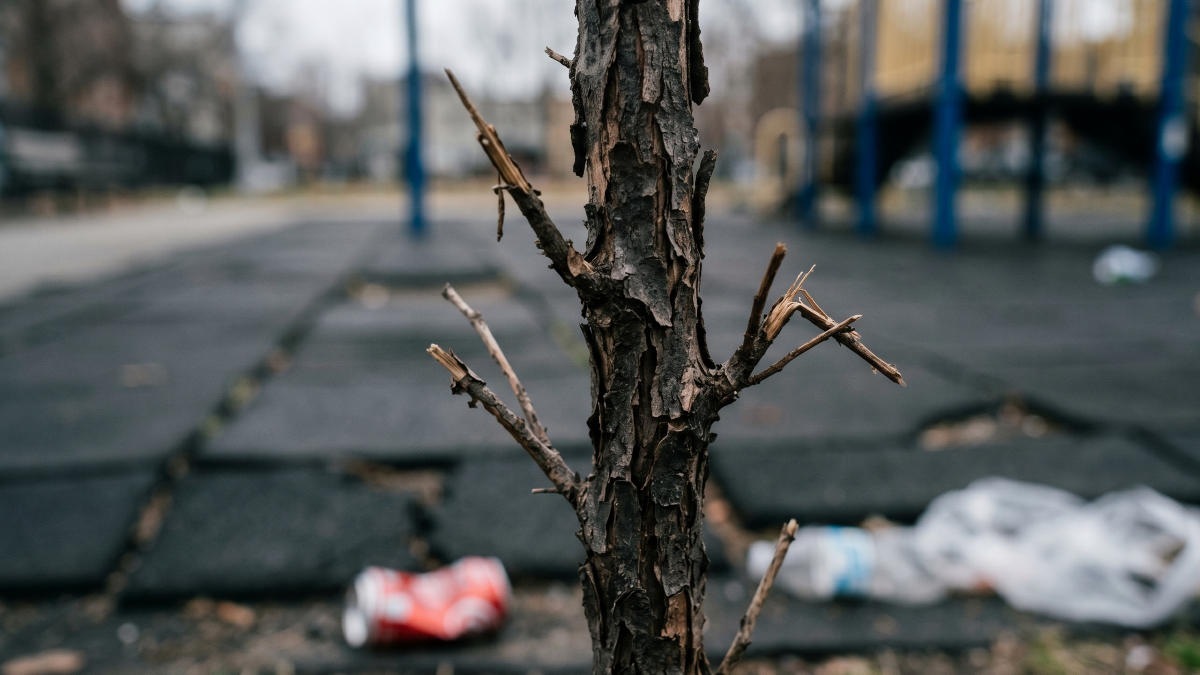
The dire state of the park’s green spaces is particularly alarming. Of the five million rubles (roughly $55,000 USD) specifically earmarked for landscaping, a significant portion appears to have been spent on non-viable plant material. According to landscape experts from the Kamchatka branch of the All-Russian Popular Front, almost the entirety of the park’s carefully selected flora perished under the winter snows. Only a handful of young spruce trees, which local activists diligently tended to last season, have shown signs of life, sprouting new shoots amidst the widespread devastation, serving as a stark reminder of what could have been.
Specialists strongly suspect cost-cutting measures by the contractor and a blatant disregard for the agreed-upon assortment list for plant procurement. For instance, birch trees planted along what was envisioned as a grand alley display stark differences in size, with many exhibiting bifurcated trunks – characteristics more indicative of wild trees haphazardly dug from a nearby forest rather than high-quality, cultivated saplings sourced from a specialized nursery. This suggests a potential substitution of materials, directly undermining the project’s ecological integrity and aesthetic goals.
The degradation extends far beyond the botanical elements. Just months after the facility was handed over, wooden structures within the park are already in urgent need of repair, while the rubber surfacing of the children’s playground has developed extensive cracks. Compounding these structural failures is a glaring absence of basic maintenance. Public restrooms remain inexplicably closed, overflowing waste bins blight the landscape, and refuse, scattered by the wind, now litters the once-pristine lawns, transforming a public amenity into an unsightly and unsanitary area.
The findings of the public inspection have been formally submitted to the Elizovo administration and relevant supervisory bodies. These authorities are now tasked with conducting a thorough legal assessment of the actions taken by both the supplier of the planting material and the organization responsible for the ongoing maintenance of the federally funded site. This incident not only highlights a severe failure in project execution and oversight but also prompts broader questions about accountability, transparency, and the effective allocation of substantial federal funds in regional development initiatives across Russia.