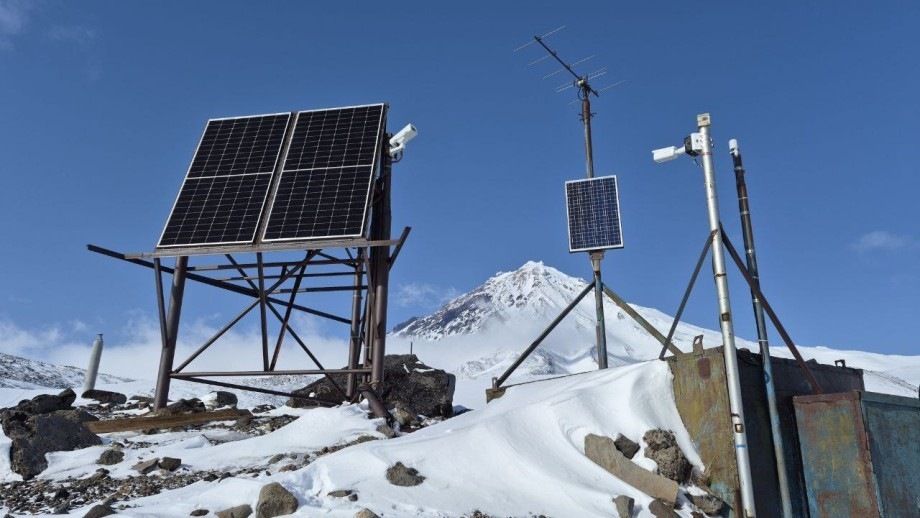
Russia is significantly enhancing its geophysical monitoring capabilities in the Far East, a region characterized by its dramatic volcanic landscapes and high seismic activity. The Kamchatka Branch of the Federal Research Center “Unified Geophysical Service of the Russian Academy of Sciences” (KF FITS EGS RAS) has inaugurated a new strategic outpost, named “Nalychevo.” This facility is specifically designed to bolster surveillance of the Avacha group of volcanoes, recognized as one of the Kamchatka Peninsula’s most active and potentially hazardous volcanic zones.
The “Nalychevo” station is outfitted with a sophisticated suite of instruments crucial for comprehensive volcanic observation. Its advanced seismic apparatus is capable of detecting subtle subterranean tremors, while Global Navigation Satellite System (GNSS) receivers meticulously track minute ground deformations – a key indicator of magmatic movement and impending eruptions. Additionally, high-resolution video cameras provide continuous, 24-hour visual monitoring of volcanic activity, capturing everything from nascent eruptions to the dispersal of ash plumes.
The strategic geographical placement of this new observation point is of paramount importance. The Avachinsko-Koryakskaya volcanic group stands in close proximity to Kamchatka’s largest population centers, including Petropavlovsk-Kamchatsky, Elizovo, and Vilyuchinsk. The real-time data streamed from the “Nalychevo” station will empower scientists to generate more precise forecasts of volcanic events. This capability is critical for authorities to disseminate timely warnings and implement robust preparedness measures, directly enhancing the safety and resilience of local communities facing potential natural threats.
This expansion is an integral part of a broader, ongoing scientific program aimed at strengthening regional disaster preparedness. In conjunction with the “Nalychevo” development, several existing observation stations have undergone significant modernization, and another new facility, the “Peplovaya” station, has been brought online. Collectively, these initiatives substantially expand the coverage of the regional geophysical control network and markedly improve the quality and reliability of collected data. Kamchatka has long been recognized internationally as one of Russia’s most seismically active territories, currently operating a permanent network of up to 90 stationary seismic stations, a number that can fluctuate with the inclusion of temporary installations by international scientific expeditions.
These vital modernization and infrastructure expansion efforts are slated to continue through 2026. Experts underscore that the increased density of advanced monitoring stations and their technical upgrade directly contribute to the safety and security of both the peninsula’s permanent inhabitants and the growing number of tourists drawn to its unique natural wonders. This ongoing investment highlights Russia’s commitment to mitigating natural hazards and protecting its population in this dynamic and geologically active region.