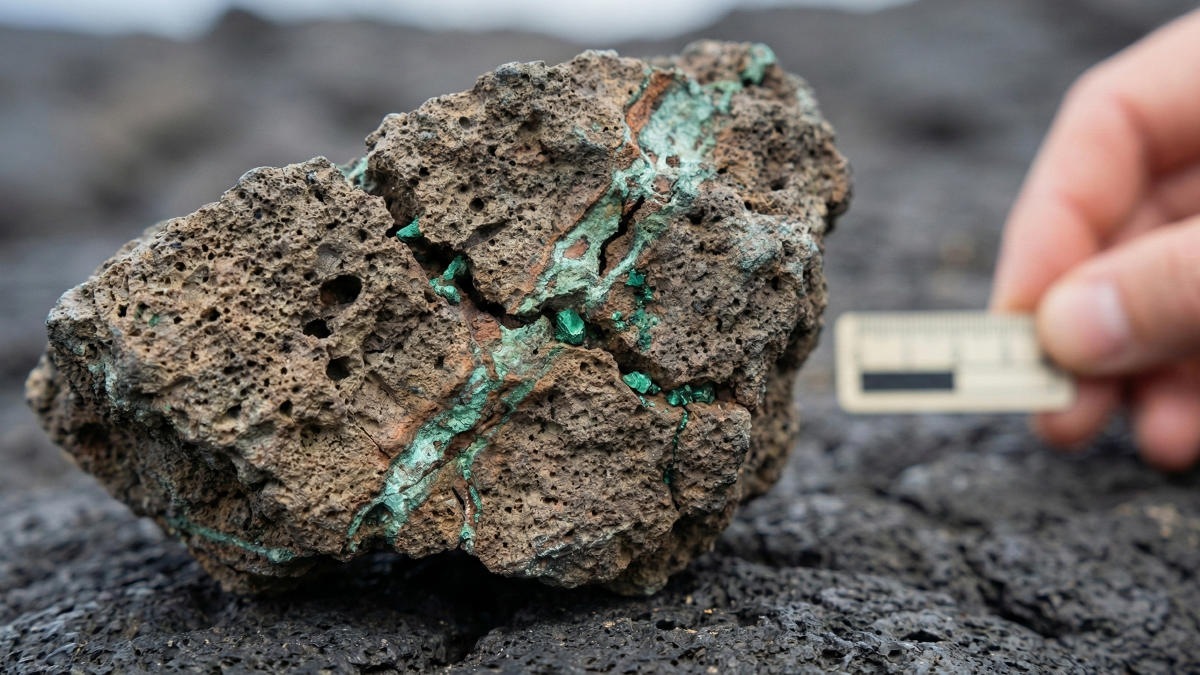
A groundbreaking discovery on the eastern coast of Russia’s remote Kamchatka Peninsula has unveiled evidence of vast copper deposits, signaling a potentially transformative development for both regional industry and global resource markets. Researchers from Vitus Bering Kamchatka State University and the Institute of Volcanology and Seismology of the Far Eastern Branch of the Russian Academy of Sciences have identified widespread mineralization in rock samples stretching from Avacha Bay to Mutnaya Bay, confirming the area’s high potential for large-scale mining operations.
Historically, Kamchatka has been recognized for its mineral prospects, particularly for copper-porphyry systems, yet the southeastern coastal strip remained largely underexplored until now. This recent scientific endeavor draws parallels with geological findings in resource-rich regions like Indonesia and Alaska, where similar Miocene-age deposits have been found not only inland but also in coastal zones of island arcs, suggesting a significant likelihood of extensive reserves beneath Kamchatka’s rugged terrain.
The research involved intensive fieldwork, during which specialists meticulously examined outcrops along the Coastal Ridge facing the Pacific Ocean. A total of 141 samples of magmatic and sedimentary rocks were collected and subjected to detailed geochemical analysis. The results are compelling: over a third of the samples displayed elevated copper concentrations. Notably, 49 samples exceeded 100 parts per million (ppm), with a peak value of 3042 ppm recorded in gabbro rocks from the Zavoykovo volcanic complex near Russkaya Bay.
These findings are particularly striking when compared to typical crustal copper levels, which generally range between 47 and 100 ppm. The enriched samples averaged 223 ppm, significantly surpassing standard geological benchmarks, where acidic rocks usually contain about 20 ppm and basic rocks around 100 ppm. This substantial elevation in metal content points directly to the presence of economically viable ore bodies, providing a robust scientific foundation for future targeted geological exploration.
The highest concentrations of copper were found in late-phase subvolcanic andesibasalt rocks, with levels comparable to the rich anomalies found in the Peschanka deposit in Russia’s Chukotka Autonomous Okrug, one of the largest copper deposits in the country. Such comparisons underscore the immense scale of the Kamchatka discovery and its potential to significantly augment Russia’s mineral wealth and global copper supply.
In an era of accelerating global demand for copper—a critical material for renewable energy technologies, electric vehicles, and advanced electronics—the identification of a new, substantial source on the strategic Kamchatka Peninsula holds significant international implications. It could influence future commodity markets, bolster Russia’s position as a key resource provider, and potentially spur new development and investment in the Russian Far East, drawing attention from international mining companies and resource-intensive economies alike. The stage is now set for prospective new search projects that could redefine the region’s economic landscape and contribute substantially to global industrial needs.