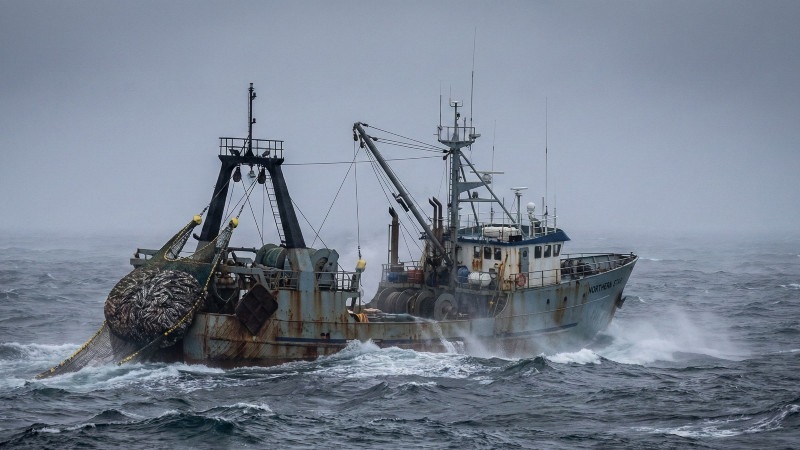
Today, January 17, marks a pivotal moment for global environmental governance as the new United Nations Convention on the Conservation and Sustainable Use of Marine Biological Diversity of Areas Beyond National Jurisdiction, widely known as the ‘High Seas Treaty,’ officially enters into force. This landmark agreement represents the first international accord specifically designed to protect the vast ecosystems of the open ocean—a colossal expanse covering roughly two-thirds of the world’s ocean surface and 95% of its volume, which until now remained largely vulnerable to human pressures.
Developed under the umbrella of the UN Convention on the Law of the Sea, the treaty is set to bridge critical legal gaps in the regulation of international waters. A cornerstone of this new framework is the establishment of Marine Protected Areas (MPAs) in the high seas. This mechanism is crucial for achieving the ambitious global target set by the Kunming-Montreal Global Biodiversity Framework: to conserve at least 30% of the world’s oceans by 2030. Currently, less than 1% of these open waters are protected, leaving their delicate ecosystems susceptible to industrial fishing, deep-sea mining, and other extractive activities.
The document mandates compulsory environmental impact assessments for any activities that could harm marine biodiversity, with these evaluations falling under international oversight. This provision imposes heightened responsibilities on both states and private enterprises. Furthermore, the agreement addresses complex issues related to access to marine genetic resources and digital sequence information. It enshrines the principle of “common heritage of humankind,” advocating for the equitable sharing of benefits derived from these resources among developed and developing nations, alongside technology transfer and capacity building initiatives to foster scientific capabilities globally.
The journey to this historic agreement spanned nearly two decades of painstaking negotiations, culminating in a consensus on June 19, 2023. For the treaty’s mechanisms to be activated, a minimum of 60 states were required to ratify it. This crucial threshold was finally met on September 19, 2025, when Morocco became the 60th nation to deposit its instrument of ratification. As per the treaty’s regulations, it formally comes into effect 120 days following this milestone. As of January 2026, 145 countries have signed the agreement, and 83 states, including all European Union members, have officially ratified it.
With the treaty now in force, preparations will commence for the inaugural Conference of the Parties (COP), which will oversee the establishment of a secretariat and initiate the first processes for designating protected zones. Belgium and Chile are currently vying to host the permanent secretariat. It is important to note that the agreement is not retroactive and applies only to those states that have officially ratified it, yet it undeniably lays the foundation for a transformative new architecture of international cooperation in ocean governance.
However, this broad international consensus is not universal. The Russian Federation notably abstained from participating in the treaty, neither signing nor ratifying the document, having distanced itself from the agreement during its drafting phase. Moscow has cited concerns over “undefined scientific standards” within the text and perceived risks of excessive international control that could potentially impinge upon legitimate activities in the high seas, including shipping, fishing, and deep-sea resource extraction. Russia has also expressed skepticism regarding the proposed funding model, arguing that the lack of predictable financial mechanisms could burden states with significant oceanic interests.
Russia’s stance aligns with a broader strategy of re-evaluating its involvement in certain international maritime agreements, perceiving some norms as detrimental to its national interests. During the UN General Assembly in August 2023, Russian diplomats highlighted what they considered unacceptable aspects of the document. A similar cautious approach has been observed from other significant players: the United States has signed the document but has yet to ratify it due to internal procedural requirements, while Turkey and Venezuela have also voiced doubts about the effectiveness of the new regulations. Among the ten Commonwealth of Independent States (CIS) countries, only Armenia, Kyrgyzstan, and Moldova have ratified the treaty, underscoring the fragmented global buy-in to this ambitious new era of ocean protection.