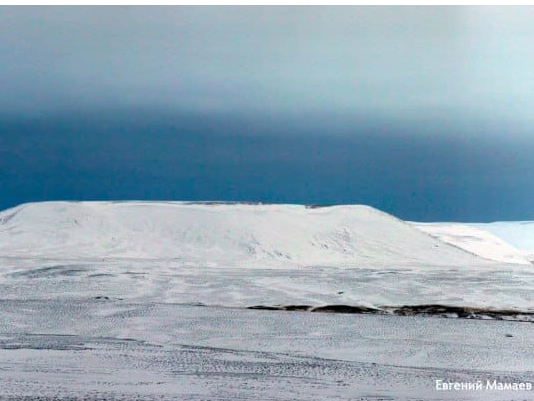
In a captivating revelation from Russia’s remote Far East, specialists from the Komandorsky Islands National Park have brought to light the extraordinary geological formations known as ‘table mountains’ on Bering Island. This unveiling offers a unique window into the Earth’s ancient past, showcasing natural wonders that stand as silent sentinels in one of the planet’s most pristine and biologically diverse regions. The discovery underscores the ongoing efforts to document and preserve the natural heritage of the Komandorsky archipelago, a UNESCO Biosphere Reserve.
These aren’t your typical dining surfaces; rather, these ‘tables’ are colossal geological structures, aptly named for their distinctively flat, mesa-like summits and steep, cliff-like sides. With an estimated age ranging from a staggering 15 to 20 million years, these ancient peaks are a testament to vast geological timescales. Their formation is attributed to a complex interplay of prehistoric volcanic activity, which laid down layers of resistant rock, followed by millions of years of relentless erosion that sculpted their unique, flat-topped profiles.
Positioned strategically, two of these majestic table buttes serve as a dramatic natural gateway to the Komandorsky Islands. They greet all visitors approaching Nikolskoye, the main settlement on Bering Island, whether arriving by sea, navigating the often-turbulent waters, or by air, descending onto this isolated outpost. Their striking presence offers a breathtaking welcome, marking the entrance to an archipelago renowned for its raw beauty and untouched wilderness.
The ongoing study and promotion of such marvels by the Komandorsky Islands National Park not only enhance our understanding of Earth’s geological history but also draw international attention to the critical importance of preserving these remote, fragile ecosystems. These ancient ‘table mountains’ are more than just landforms; they are living testaments to the planet’s dynamic forces, inviting scientists, conservationists, and adventurous travelers alike to explore the depths of geological time and the unparalleled biodiversity of Russia’s enigmatic Far East.