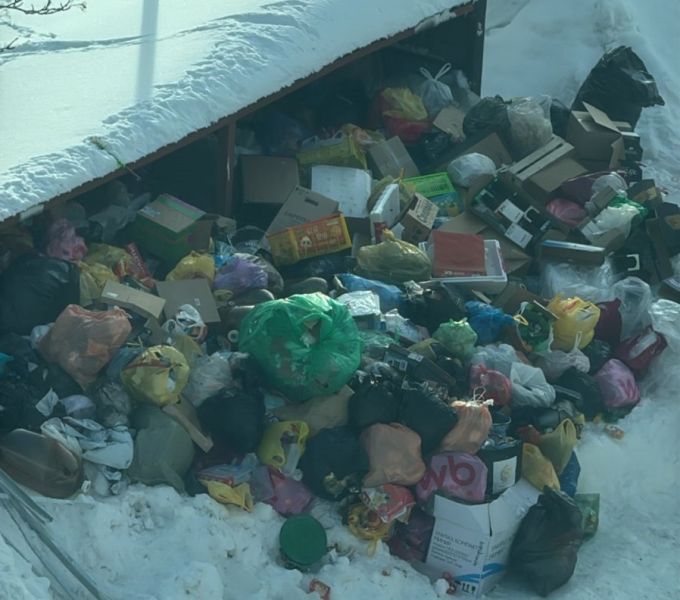
Petropavlovsk-Kamchatsky, a vital port city nestled in Russia’s remote Far East, is grappling with an escalating urban hygiene crisis, as vast accumulations of household waste threaten public health following prolonged heavy snowfall. Local authorities, spearheaded by the municipal waste management service “Spetstrans” and collaborating with property management companies, have pledged an intensified, round-the-clock effort to clear the most significant garbage dumps within the coming days, aiming to restore normalcy to the snow-choked streets.
The severity of the situation became starkly apparent in late December, after relentless snowfalls paralyzed the region, rendering many waste collection points inaccessible. Residents in the capital of the Kamchatka Krai were previously advised by authorities, in an unprecedented move, to refrain from taking out their trash and instead store it on balconies and loggias, given the impassability of roads for collection vehicles. This directive led to the formation of towering “mountains of waste” at container sites, some reportedly rising higher than a human, presenting a grim spectacle and significant sanitation challenge across the city since December 26th.
In response to the growing public outcry and deteriorating conditions, “Spetstrans” has announced a comprehensive cleanup strategy. Crews will work through weekends and nights, focusing on clearing accumulated municipal solid waste from all accessible container platforms. Where heavy machinery cannot reach, manual labor will be deployed to ensure thorough removal. Furthermore, additional large waste containers, colloquially termed “boats,” are being strategically placed, with residents receiving updates on their locations through house chat groups managed by their property companies.
Officials from the Kamchatka regional government have stated that this immediate, urgent operation is a precursor to a broader, systemic overhaul. Beginning January 1st, waste management services are slated to transition from reactive, localized interventions to a proactive, comprehensive cleaning schedule across all districts. This permanent shift will include continued night-time waste collection, aiming to prevent future backlogs and ensure consistent urban cleanliness, irrespective of weather conditions.
This challenging scenario in Petropavlovsk-Kamchatsky underscores the intricate balance between urban infrastructure, extreme climatic conditions, and public services in remote parts of the world. The ongoing efforts are a critical test for local governance in maintaining essential services and public well-being amidst environmental adversity, attracting attention as a case study in resilience for similar cold-climate urban centers.