Russia’s Ministry of Natural Resources and Environment has released its comprehensive annual State Report on the Environment for 2024, offering a detailed look into the nation’s ecological health. The extensive document scrutinizes the impact of economic activities, climate shifts, and the state of biological resources across the vast country. Of particular interest is the Kamchatka Krai, a region often celebrated for its pristine wilderness, which demonstrated notable, albeit mixed, dynamics across key environmental parameters last year, ranging from air quality to wildlife populations.
The report paints a concerning picture for the Far Eastern Federal District, where overall pollutant emissions increased by 5.7% in 2024, reaching a staggering 1,755.6 thousand tons. Kamchatka Krai mirrored this upward trend, with its total atmospheric emissions climbing by 7.3% to 77.2 thousand tons. Specialists attribute the bulk of this pollution to stationary industrial and energy sources, which saw an 11.2% rise in emissions to 51.8 thousand tons, underscoring the environmental costs associated with industrial expansion. In contrast, emissions from vehicular traffic remained stable at 25.4 thousand tons, identical to 2022 levels. A deeper analysis reveals a shifting composition of airborne pollutants over the peninsula; since 2015, sulfur dioxide levels have surged 4.1-fold, and nitrogen oxides by 2.8 times, alongside increases in solid particulate matter and carbon monoxide. Despite these worrying trends, the region’s climatic conditions in 2024, marked by 112% of normal precipitation and an average annual temperature of +0.3°C, reportedly aided in dispersing some of these contaminants.
The situation concerning Kamchatka’s water resources presents a complex paradox. While the region saw a marginal 1.7% decrease in overall water consumption, totaling 103.71 million cubic meters, a disturbing trend emerged in wastewater management. The discharge of untreated polluted wastewater soared by 14.1% over 2023, reaching 21.99 million cubic meters. Even more alarmingly, the volume of inadequately treated water nearly tripled within the year, hitting 9.54 million cubic meters. This indicates significant challenges in modernizing wastewater infrastructure. Curiously, amidst the general reduction in industrial water use, household consumption of fresh water per capita registered a notable 16.3% increase, suggesting shifting residential patterns or inefficiencies.
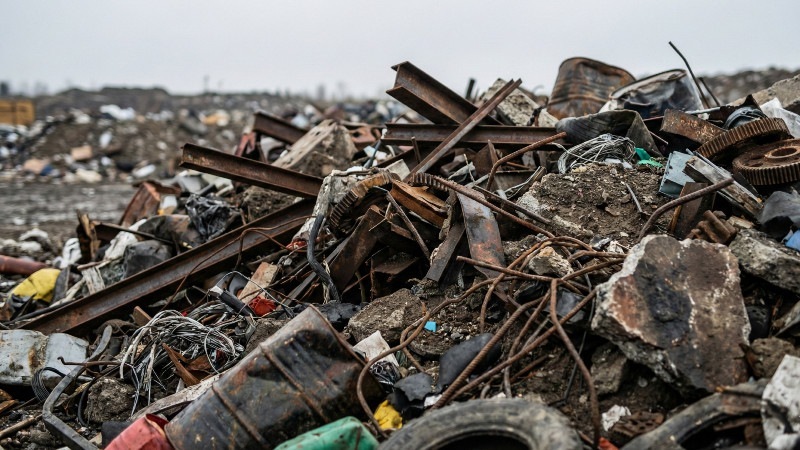
Perhaps the most dramatic shift highlighted in the 2024 report concerns waste management, directly linked to intensified economic activity in the region. The volume of waste generated nearly tripled compared to 2023, reaching an astounding 18.419 million tons. However, this surge was partially offset by a substantial, multi-fold increase in waste utilization, which amounted to 7.76 million tons. Concurrently, 4.584 million tons were sent for storage and 6.05 million tons for disposal. The report also underscores robust investment in environmental protection, with 1.38 billion rubles allocated to environmental conservation and rational resource management. The largest share of operational costs, exceeding 1.5 billion rubles, was directed towards waste management, indicating the scale of this growing challenge and the resources being mobilised to address it.
Despite the environmental pressures, Kamchatka proudly maintains its status as one of Russia’s paramount regions for biodiversity. Home to 277 recorded animal species, many of which are listed in federal and regional Red Books, the peninsula boasts significant wildlife populations. As of 2024, the brown bear population was estimated at 24,893 individuals, sables nearly 48,000, and moose over 17,500. Large populations of bighorn sheep, lynx, and wolverines also thrive in its extensive forests, affirming the region’s critical role in preserving Russia’s unique natural heritage.
Forestry dominates Kamchatka’s landscape, covering over 95% of its territory, or 44.2 million hectares. The Rosleskhoz (Federal Forestry Agency) reported impressive reforestation efforts in 2024, with the ratio of reforested areas to logged or deceased stands reaching an exceptional 313.06%. This remarkable figure points to both active natural regeneration and diligent artificial restoration efforts. Furthermore, the region’s comprehensive system of specially protected natural areas (PAs) remains a cornerstone of its conservation strategy, with federal PAs covering more than 5.4 million hectares and regional ones adding another 3.3 million hectares, safeguarding critical ecosystems and biodiversity.
State environmental oversight in the region proceeded as planned during the reporting period. Inspectors carried out extensive forest surveillance, conducting checks across numerous sites. The identified violations and levied fines underscore the persistent need for strict enforcement of environmental legislation, particularly in sectors experiencing rapid economic growth, such as forestry and waste management, where the balance between development and preservation remains a delicate and ongoing challenge.