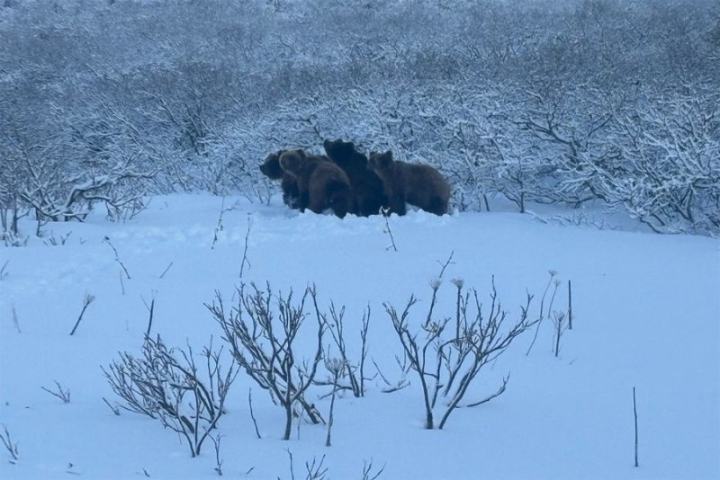
As Russia marked its annual Bear Day on December 13th, a curious phenomenon is unfolding in the remote yet ecologically vital territories of Kamchatka. While the majority of their kin across the vast country are deep in winter slumber, some brown bears in the Kronotsky Nature Reserve and South Kamchatka Federal Sanctuary are decidedly wide awake, opting for continued foraging over early hibernation.
This unusual defiance of seasonal instincts is largely attributed to an exceptionally prolonged and abundant food supply. At Kurilskoye Lake, a critical salmon spawning ground, sockeye salmon continue their lifecycle well into late winter. This rich bounty has drawn numerous bears, including a mother with three yearling cubs, a persistent young male near the ‘Ozerny’ ranger station, and at least five adult males, all actively fishing along the Ozyornaya River.
But it’s not just the lure of salmon keeping these apex predators active. Along the rugged coastline of Olga Bay in the Kronotsky Gulf, a notably well-fed bear has been observed making regular ‘promenades’ on the beach, close to the ‘Kronoki’ cordon. Scientists speculate this opportunistic individual is feasting on marine discards, including mussels and various fish washed ashore – a testament to the diverse diet these adaptable creatures can exploit when conventional food sources diminish or weather patterns shift.
Despite their current activity, the inevitable call to winter sleep will eventually come. Vladimir Gordienko, a scientific researcher at the Kronotsky Nature Reserve, sheds light on the sophisticated denning strategies employed by bears. Some meticulously prepare their hibernacula in advance, while others construct multiple dens to choose the most suitable for the season. Interestingly, some bears even delay den construction until after the first snowfall, cleverly gathering insulating materials like dry grass, moss, and branches to ensure a warm, dry refuge – a critical factor for their survival through the harsh Kamchatkan winter.