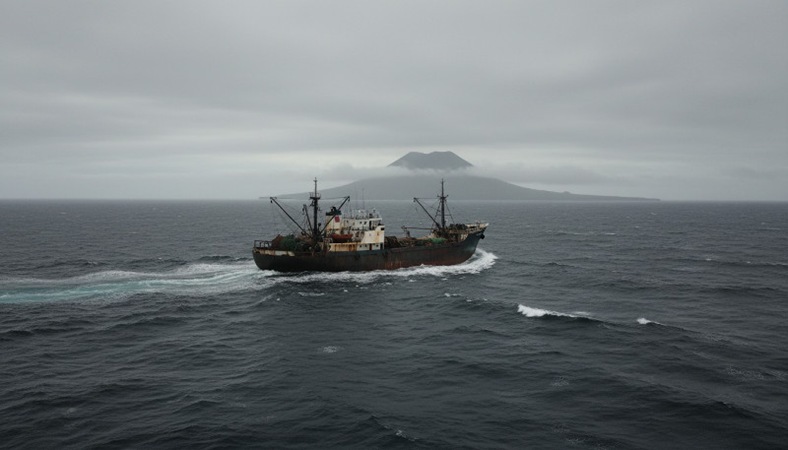
Khabarovsk, Russia – The recent session of the Far Eastern Scientific-Fisheries Council (DVNPS) concluded with a comprehensive review of the 2025 salmon fishing season, revealing a complex picture of regional disparities driven largely by global climate change. Despite an overall challenging environmental backdrop and declining stocks in several areas, Russia’s Kamchatka territory solidified its position as the country’s preeminent fishing region, accounting for the lion’s share of Pacific salmon catches.
Ilya Shestakov, head of the Federal Agency for Fisheries (Rosrybolovstvo), opened the session, noting that the season was generally successful, with scientific data validating sufficient stocks for sustainable harvesting. He particularly highlighted Kamchatka’s undeniable leadership, whose performance, alongside the Khabarovsk Krai, demonstrated robust stability. However, the situation in Sakhalin raises significant concerns, prompting regulators to consider stringent measures, including potential fishing bans in certain areas, for the upcoming 2026 cycle.
Kirill Kolonchin, Director of the All-Russian Research Institute of Fisheries and Oceanography (VNIRO), presented detailed figures, indicating that the total Far Eastern Pacific salmon catch reached approximately 335,500 tonnes, slightly exceeding initial forecasts. Kamchatka’s contribution was pivotal, with its fishermen landing 259,000 tonnes, representing a remarkable 77% of the entire Far Eastern harvest. The Khabarovsk Krai and Sakhalin Oblast followed distantly, securing 33,000 and 21,000 tonnes, respectively, underscoring the pronounced geographical imbalance.
Scientists attribute this stark regional divergence to global climate change. Warming ocean temperatures and altered atmospheric circulation patterns are leading to a redistribution of heat and moisture, consequently shifting marine ecosystems. This has created favorable conditions for fish approaches in northern regions like Kamchatka and the Magadan Oblast, while southern areas face significant stock deficits. VNIRO forecasts suggest that the Karaginsky subzone could yield 39,000 tonnes of pink salmon in 2026, with the West Kamchatka subzone projected to exceed 100,000 tonnes.
Beyond salmon, the council also addressed preparations for the pollock fishing season and the harvesting of pelagic species. Alexey Baitalyuk, head of VNIRO’s Pacific branch, emphasized the increasing importance of the North Okhotsk subzone, adjacent to western Kamchatka, for pollock fishing. Regarding Pacific sardine (iwashi) and mackerel, this year’s hydrological conditions – specifically, colder waters within Russia’s exclusive economic zone – propelled fish migration into international waters and Japan’s zone, impacting domestic catches. Nevertheless, scientific projections anticipate a recovery in these stocks in the coming years.
Notably, discussions also focused on recreational fishing and tourism. Representatives from the Khabarovsk Krai tourism sector proposed adopting Kamchatka’s successful model for recreational crab fishing. Kamchatka offers more flexible conditions for amateur fishermen and tourists, permitting the catch of king crab in designated areas outside commercial zones, with seasonal restrictions that do not impede peak tourism. Extending such practices to neighboring regions could significantly boost gastronomic tourism throughout the Russian Far East.
Technical matters, including the fleet’s transition to domestic satellite positioning systems and improvements to fishing regulations for indigenous peoples of the North, were also on the agenda. The DVNPS’s final decisions will form the bedrock of Russia’s 2026 fishing strategy, where the resource potential of Kamchatka and the Okhotsk Sea is expected to retain its paramount role in global seafood production and regional economic stability.