In 2026, ichthyologists continued genetic research on kokanee – a freshwater form of sockeye salmon inhabiting Lake Kronotskoye in Kamchatka. The research aims to determine the exact number of isolated groups that have formed over millennia of isolation in the largest freshwater body on the peninsula. Modern DNA analysis methods are being utilized to evaluate speciation hypotheses originally proposed by Soviet researchers.
Lake Kronotskoye formed over ten thousand years ago when lava flows from the Kronotsky and Krasheninnikov volcanoes blocked the Paleokronotskaya riverbed. Anadromous sockeye salmon, cut off from the ocean, gave rise to the kokanee. The entire life cycle of these fish now takes place within the lake and its tributaries. Through evolution, the population split into planktivores, which feed on crustaceans in the water column, and benthivores, which consume bottom-dwelling invertebrates. These groups possess distinct physical characteristics and reproduce under different environmental conditions.
Significant differences in spawning times and locations indicate the presence of more isolated groups within the ecosystem than traditionally recognized. This theory was first advanced in the 1970s and 1980s, identifying these local stocks as subisolates. While technical limitations previously prevented the verification of their genetic independence, recent advancements in population genetics enabled the resumption of this inquiry, beginning with initial sample collection in 2025.
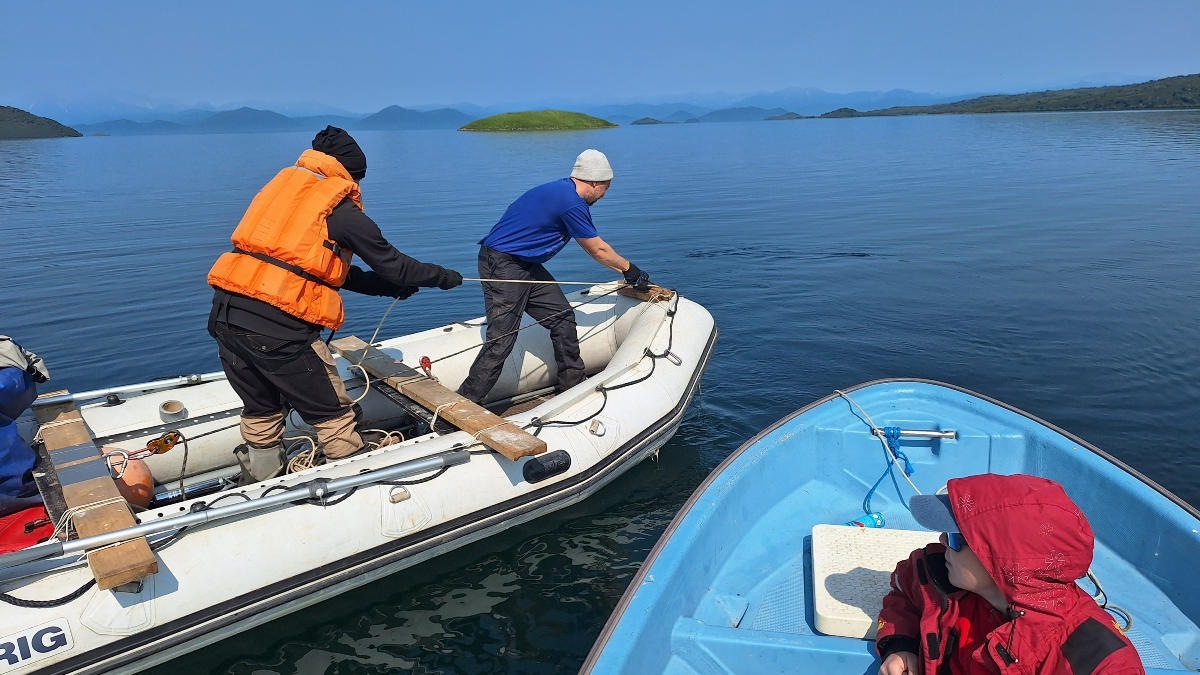
During the 2026 season, specialists focused on early-spawning groups. These include benthivores that reproduce in shallow lake waters in July and planktivores that migrate into the rivers of the northeastern slopes of the Valaginsky Range. However, weather anomalies severely complicated material collection. Heavy winter snowfalls led to unusually high water levels in the rivers, which disrupted the standard migration rhythms of the fish.
Consequently, only two of the six planned samples were successfully collected. While reproduction within the lake itself proceeded according to schedule, the number of spawning fish in streams and rivers was anomalously low. Spawning in certain tributaries commenced earlier than usual, others experienced significant delays, and some watercourses saw no spawning activity at all.
The unexpected results of the field season demonstrate that water level fluctuations exert a direct and localized impact on the reproductive success of freshwater salmon, similar to their marine counterparts. The genetic research project is scheduled to continue in 2027 to gather the remaining necessary data.