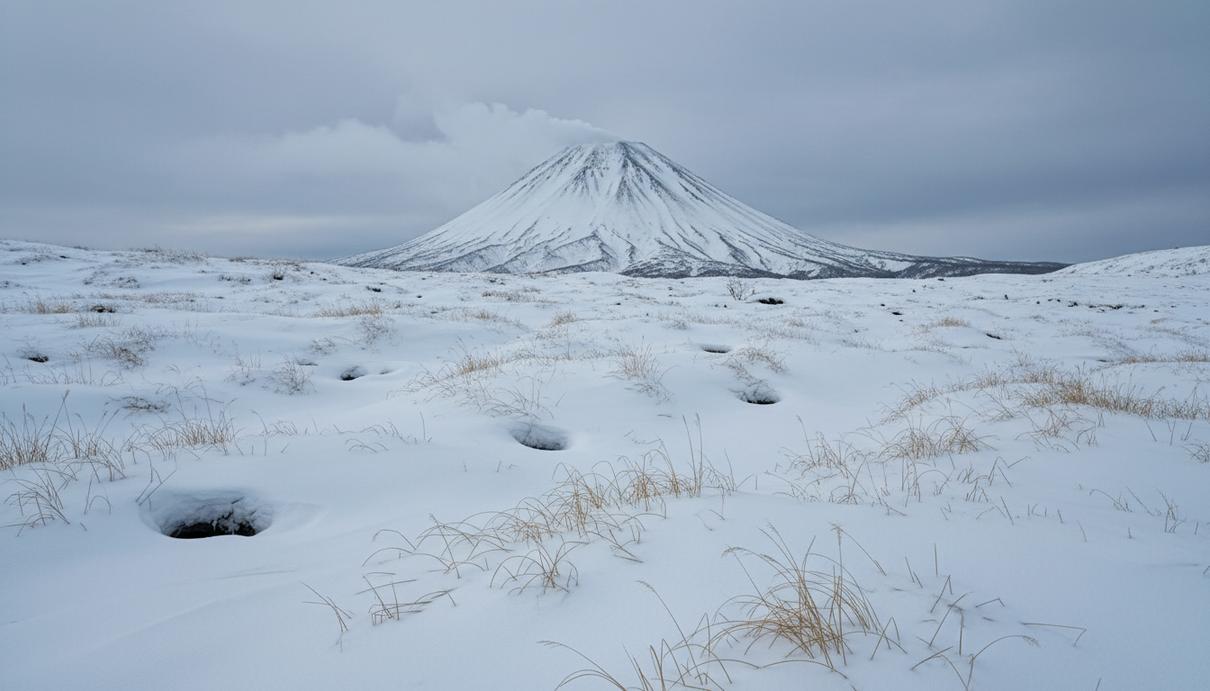
The population of Beringian ground squirrels in the Kamchatka Territory has entered seasonal hibernation. The biological cycle of these rodents is strictly tied to the climatic conditions of the peninsula – winter dormancy begins with the first steady frosts and lasts until April or May. During this period, the animals remain continuously in deep underground shelters.
The hibernation of these ground squirrels lasts approximately eight months. Physiologically, the process involves an extreme conservation of biological resources. The body temperature of the animal drops to ten degrees Celsius, and the metabolic rate falls to a minimum. By the time they awaken in the spring, the rodents lose up to forty percent of their initial body weight, sustaining themselves entirely on fat reserves accumulated during the short warm season.
The survival strategy of the species also includes behavioral adaptations. Before entering hibernation, the ground squirrels establish food caches within their extensive network of burrows. The collected provisions are not consumed during the winter but serve as the primary source of nutrition in early spring – a time when dense snow cover still remains on the surface and fresh vegetation is unavailable.
Beringian ground squirrels form large colonies, constructing complex, multilevel tunnel systems. In Kamchatka, their habitat encompasses mountainous regions and distinct volcanic landscapes. Colonies are found in the calderas of extinct volcanoes and on the slopes of active ones, including the Krasheninnikov volcano. Within the Kronotsky Nature Reserve, a high density of burrows is recorded in the Kronotsky Bogachevskaya tundra – a zone where the summer ecosystem provides an optimal diet of grasses, roots, and berries.