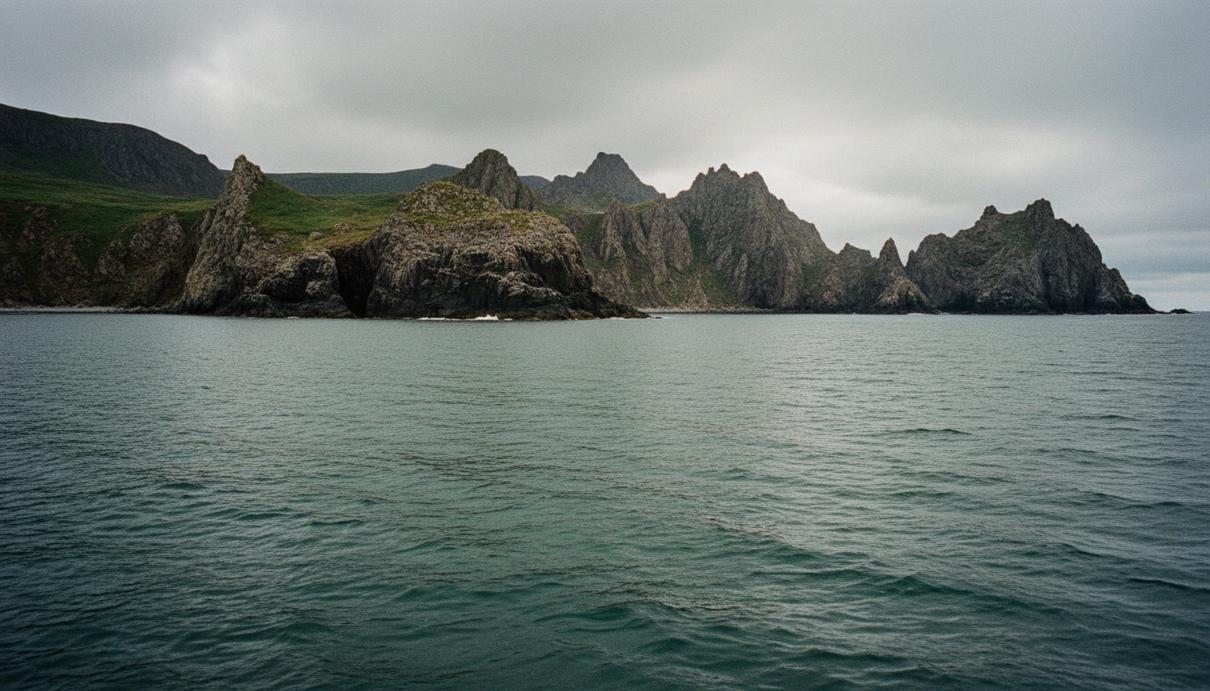
The microalgae species Karenia mikimotoi has been detected in the surface waters of Avacha Bay. This phytoplankton triggered a massive die-off of benthic marine animals off the coast of Kamchatka in the autumn of 2020. This marks the first time the species has been recorded within the bay itself, where regular ecological monitoring has been conducted since 2013.
While these microorganisms were previously documented in the wider Avacha Gulf during the 1980s, current algae concentrations in Rakova Bay remain at a safe level. Nevertheless, shifts in natural environmental factors could stimulate active reproduction, leading to an algal bloom and toxic impacts on the marine ecosystem.
Four years ago, the unchecked proliferation of Karenia microalgae precipitated an ecological crisis along the eastern and southern coasts of the Kamchatka Peninsula and in the Sea of Okhotsk. Throughout September and October 2020, substantial quantities of dead sea urchins, mussels, octopuses, and bottom-dwelling fish washed ashore. The toxic conditions also decimated commercial populations of whelk. The precise mechanisms initiating these blooms remain insufficiently understood, making it impossible to forecast the situation for the current season.
Ecological monitoring continues amid recent environmental anomalies in the coastal zone of Petropavlovsk-Kamchatsky. In September, night-time bioluminescence was observed in Avacha Bay, alongside an accumulation of dead starfish near the city embankment and Seroglazka Bay. The bioluminescence is associated with the activity of different microalgae – Skeletonema and Alexandrium catenella. The starfish mortality, primarily localized near sewage outfalls on the Ozernovskaya Spit, may have been caused by local pollution, although the exact cause of this event remains unconfirmed.