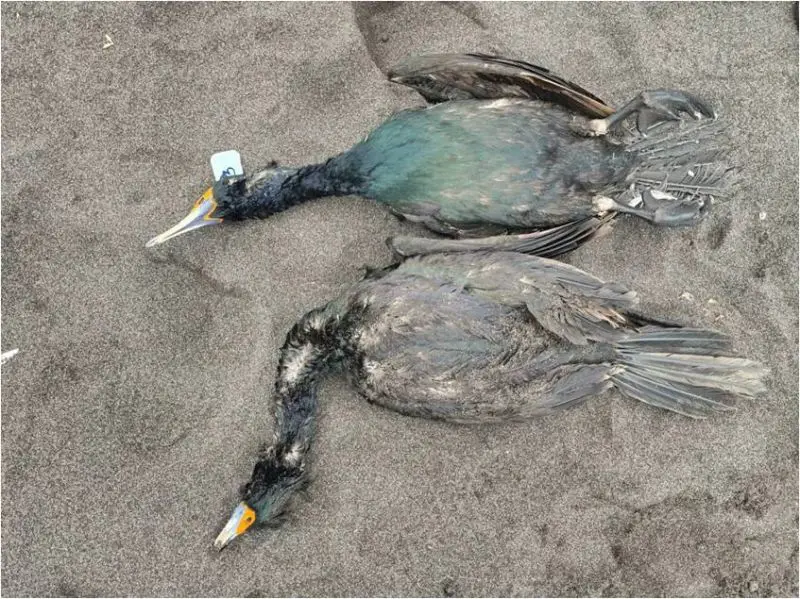
Leading scientific institutes in the Russian Far East have launched a comprehensive investigation into the deaths of marine birds at Khalaktyrsky Beach in late July. Initial data indicate that the negative environmental impact was brief and localized, presenting no ongoing threat to other marine organisms. Final conclusions regarding the exact cause of the incident will be established following the completion of molecular and toxicological laboratory analyses, alongside satellite monitoring of the surrounding waters.
Research coordination efforts were established during a working meeting at Vitus Bering Kamchatka State University as part of the Interdepartmental Comprehensive Program for Scientific Research of Kamchatka. The broader ecosystem remains unaffected, as no mass mortalities of fish or marine mammals have been recorded in the Avacha Gulf. Surveys of the waters near Petropavlovsk-Kamchatsky conducted on August 11 and 12 confirmed the absence of any threats to aquatic biological resources.
The timeline of the ecological event was precisely documented through coastal surveys. Between July 25 and 27, no mass fatalities were observed, with the first significant discoveries of dead birds occurring on July 28. A subsequent survey of the southern section of the beach on July 29 recorded 263 avian carcasses, averaging approximately 33 individuals per square kilometer. The fatalities spanned ten species – predominantly featuring pelagic and red-faced cormorants, thick-billed murres, and tufted puffins. These species are primarily ichthyophages that forage in both the surface and benthic layers of the ocean. By August 6, an inspection of the northern section of the beach showed a significant decline in the density of dead birds to 12 individuals per square kilometer. The proportion of fresh carcasses was approximately 12 percent, reinforcing the assessment that the environmental disturbance was strictly short-term.
Biological samples collected from the site are being transported for molecular toxicological analysis at the laboratories of the Far Eastern Federal University and the Pacific Institute of Bioorganic Chemistry. To determine the full geographic scope of the event, researchers are conducting aerial drone surveys of the coastline and satellite monitoring of coastal waters through the Aerocosmos Research Institute. This data will be integrated with field observations from the Kronotsky Nature Reserve, the Volcanoes of Kamchatka Nature Park, and the Petropavlovsk-Kamchatsky municipal administration.
The collaborative response involves specialists from the Institute of the World Ocean, the Institute of Volcanology and Seismology, the Pacific Institute of Geography, the Russian Federal Research Institute of Fisheries and Oceanography, and the Aerocosmos Research Institute. These teams are analyzing the potential causes of the incident alongside previous field assessments conducted by federal environmental and agricultural oversight agencies. An official scientific conclusion regarding the environmental event will be published immediately upon the completion of all laboratory tests and the processing of remote Earth sensing data.