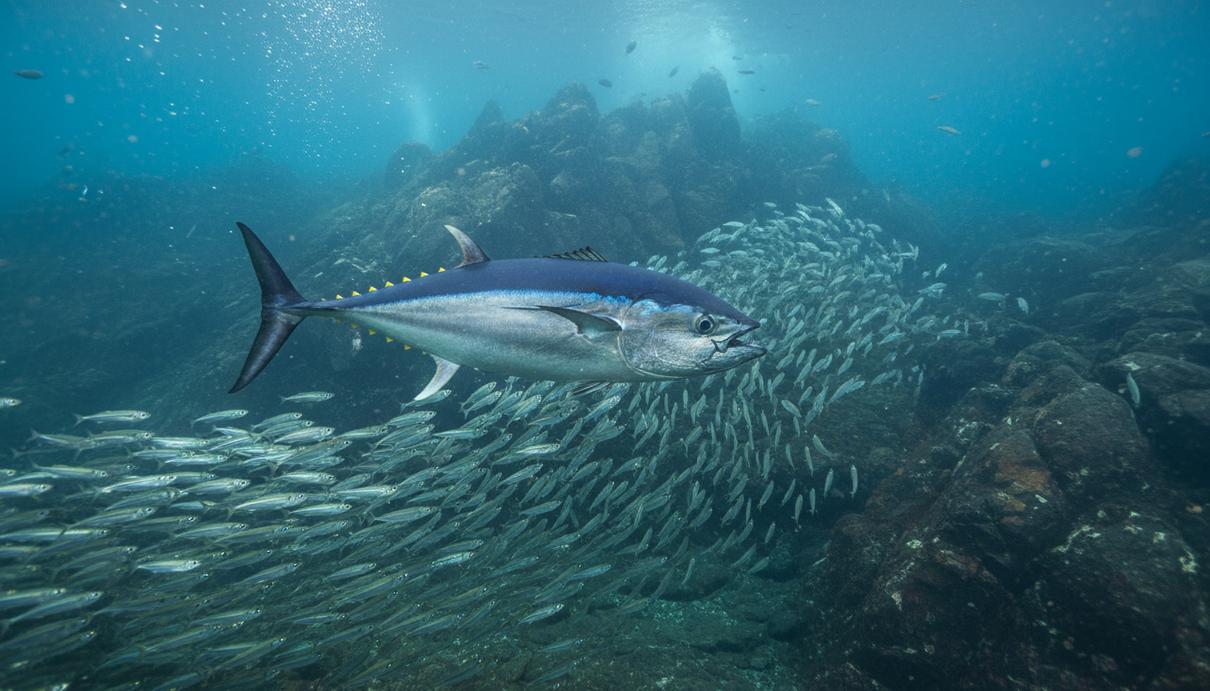
Pacific bluefin tuna are increasingly appearing in the coastal waters of Kamchatka – an atypical phenomenon for the region. Over the summer season, fishermen caught eighteen individuals of this species, which was previously considered exotic for the Far Eastern seas. The arrival of this warm-water predator in the Kronotsky and Kamchatka gulfs indicates a gradual transformation of marine ecosystems and a shift in the species composition of fish in the North Pacific.
The migrating tuna are actively hunting local salmon populations. Examinations of the stomach contents of predators caught in the Kamchatka Gulf and the mouth of the Zhupanova River revealed coho salmon and juvenile sockeye salmon. This integration of a new species into local food chains could ultimately affect the stocks of the peninsula’s traditional commercial fish.
The northward expansion of the Pacific bluefin tuna habitat up to fifty-six degrees north latitude is linked to global climate processes. Surface waters off the coast of the peninsula have warmed to 15–20 degrees Celsius. Such temperature ranges are typically characteristic of the subtropical waters of Japan and the southern Kuril Islands. This shift in climate boundaries is driven by general warming and the record-breaking El Niño phenomenon recorded in the winter and spring of 2026. Consequently, sea surface temperatures in the northwestern Pacific Ocean exceeded the multi-year average by nearly two and a half degrees, with stable positive temperature anomalies persisting in the region for the past five years.
The commercial status of tuna in the region is currently in its formative stages. Existing fishing regulations do not restrict the harvesting of this species with quotas. Commercial fishing enterprises are permitted to catch and process tuna provided they strictly record the volumes in their fishing logs. The industry has not yet established uniform yield standards for this species, leading fishing companies to apply individual metrics for the frozen product. Recreational fishing also remains exempt from specific prohibitions.
To understand the scale of this migration and evaluate the potential for commercial exploitation of this new resource, researchers have initiated additional data collection. Fishermen are requested to document every instance of a tuna catch. The most valuable data for these studies include the exact coordinates and depth of the catch location, the specifications of the gear used, as well as the weight, length, and photographs of the caught specimens. These statistics will enable marine biologists to forecast the future behavior of the population under changing climate conditions.