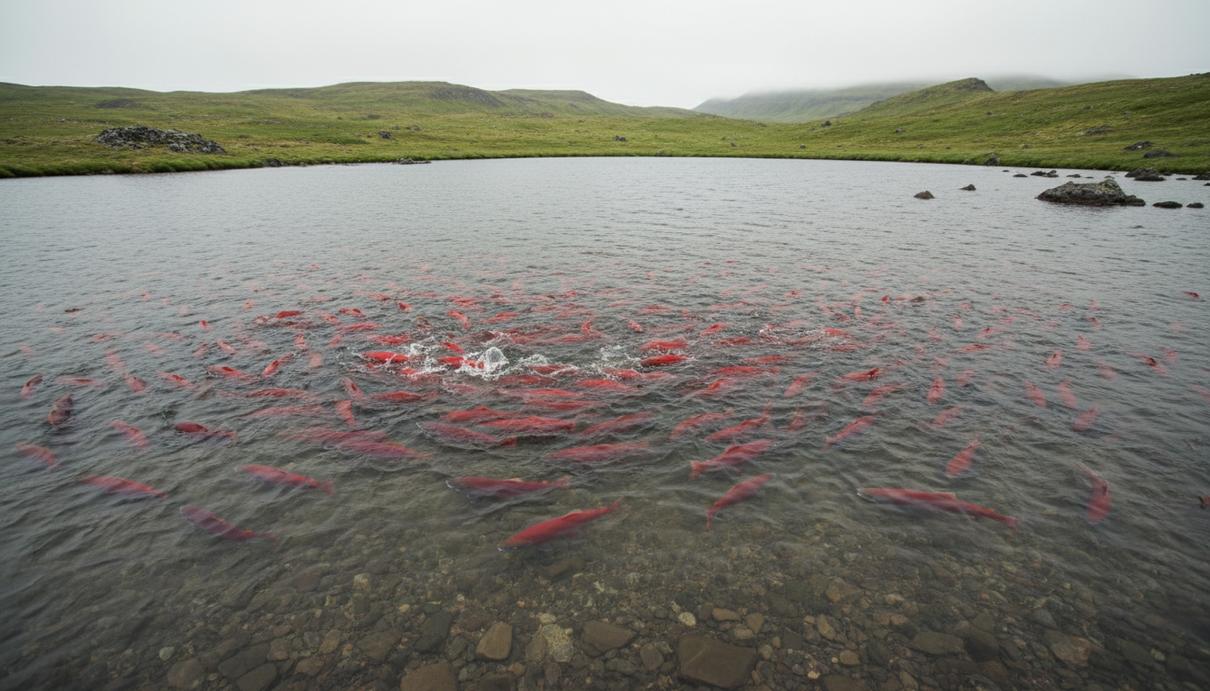
The seasonal spawning of sockeye salmon has begun on Bering Island, part of the Commander Islands archipelago. The primary concentration of Pacific salmon is located in Lake Sarannoye – the largest inland body of water on the island. The migration of these fish from the Pacific Ocean into fresh water represents a key element of the local ecosystem.
Upon entering fresh water, sockeye salmon cease feeding and undergo radical physiological changes. Their silver coloration turns bright red due to the thinning of the skin and pigmentation of muscle tissue. Males experience pronounced skeletal deformation, including elongated and curved jaws alongside changes in overall body shape. The concentration of fish in the shallow waters becomes so high that the salmon aggregations are easily visible from the shoreline without specialized equipment.
The life cycle of this salmonid species concludes immediately after spawning. The mass mortality of sockeye salmon in the lake fulfills a defining ecological function. The biomass of the spawned fish provides a vital food source for predators and birds inhabiting the archipelago. Additionally, the decaying organic matter enriches the freshwater lake with oceanic nutrients, establishing a nutritional environment for the development of hatched fry before they eventually migrate back to the sea.