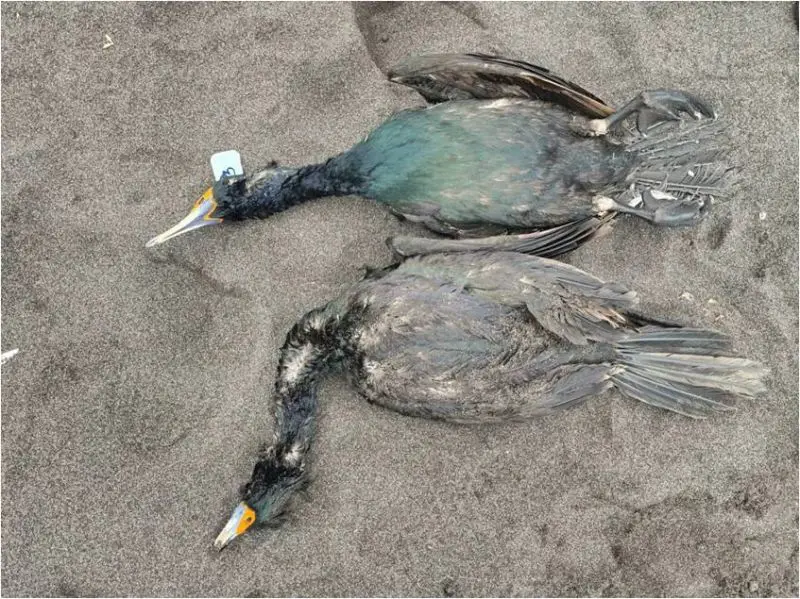
Specialists from the Kamchatka Research Institute of Fisheries and Oceanography surveyed a section of Khalaktyrsky beach between the Khalaktyrka River and the Orca surfing camp to investigate recent wildlife fatalities. A coastal survey documented numerous dead seabirds that had washed ashore over an extended period. The count included 115 red-faced cormorants, 22 tufted puffins, 32 Pacific murres, one pigeon guillemot, and one fork-tailed storm petrel. The varying states of decomposition indicated that the fatalities did not occur simultaneously.
Autopsies conducted on the most recently deceased cormorants, puffins, and murres revealed empty stomachs and a complete absence of helminth parasites in the liver, heart, lungs, and general body cavity. Water samples collected from the surf zone, however, contained dinoflagellates associated with harmful algal blooms, specifically Alexandrium catenella and Dinophysis acuminata.
The presence of these toxic microorganisms suggests the birds died from saxitoxin poisoning and its derivatives. Exposure likely occurred either through direct contact with the algal blooms or via the ingestion of plankton-eating fish. When these fish consume plankton and dinoflagellates, they accumulate phycotoxins in their kidneys and liver. Seabirds preying on these fish subsequently ingest concentrated amounts of these toxins through a process known as biomagnification, which ultimately proves fatal.
An earlier hypothesis attributed the mass mortality to a combination of natural and anthropogenic factors, suggesting that recent volcanic ash emissions caused excessive iron levels in the water. This environmental stress was thought to have compromised the immune systems of the birds, making them susceptible to fatal helminth infections. The recent necropsy results and water sample analyses now point toward toxic algal blooms – rather than parasitic worms – as the primary cause of the die-off.