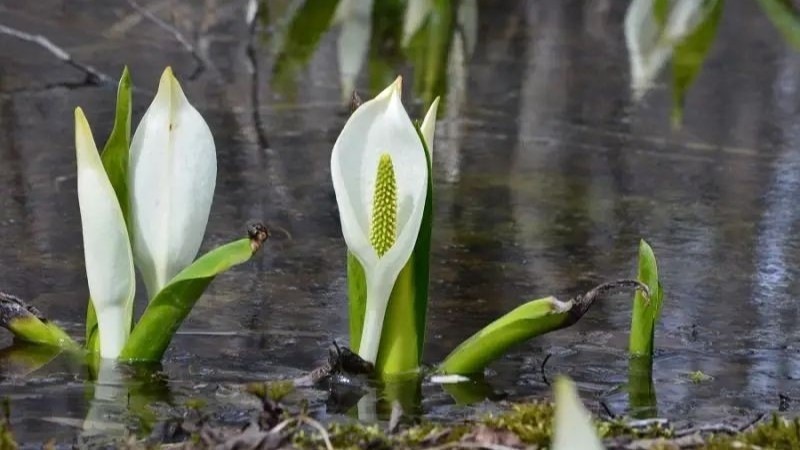
Construction of a new ecological trail designed specifically for observing the blooming of the Kamchatka lysichiton has concluded in Kamchatka. This inhabitant of humid lowlands attracts hundreds of tourists, yet unregulated access to the wetlands previously damaged the fragile root systems of the plants. The route is now equipped with wooden steps and a dedicated observation deck, ensuring anthropogenic impact on the flora is kept to a minimum.
The Kamchatka lysichiton, also known in botanical reference books as the Asian skunk-cabbage, stands out distinctly against typical northern vegetation. This toxic perennial herbaceous plant possesses giant leaves and characteristic inflorescences resembling large white sails. The visual similarity to exotic flora prompts residents and visitors of the peninsula to specifically plan trips to the areas where it grows. The active blooming period of the lysichiton traditionally occurs in May, meaning the newly established infrastructure will be fully operational in the upcoming spring season.
Alongside the structures that protect the soil from trampling, informational boards detailing the biological features of the species have been installed along the route. The integration of wooden boardwalks into the landscape was successful beyond just engineering terms. A brown bear was among the first to explore the new tourist trail – the predator’s tracks were found on the wooden boards shortly after construction work ended. Such encounters are standard for the wildlife of the peninsula and serve as a natural reminder for visitors to maintain proper distance while on the route.