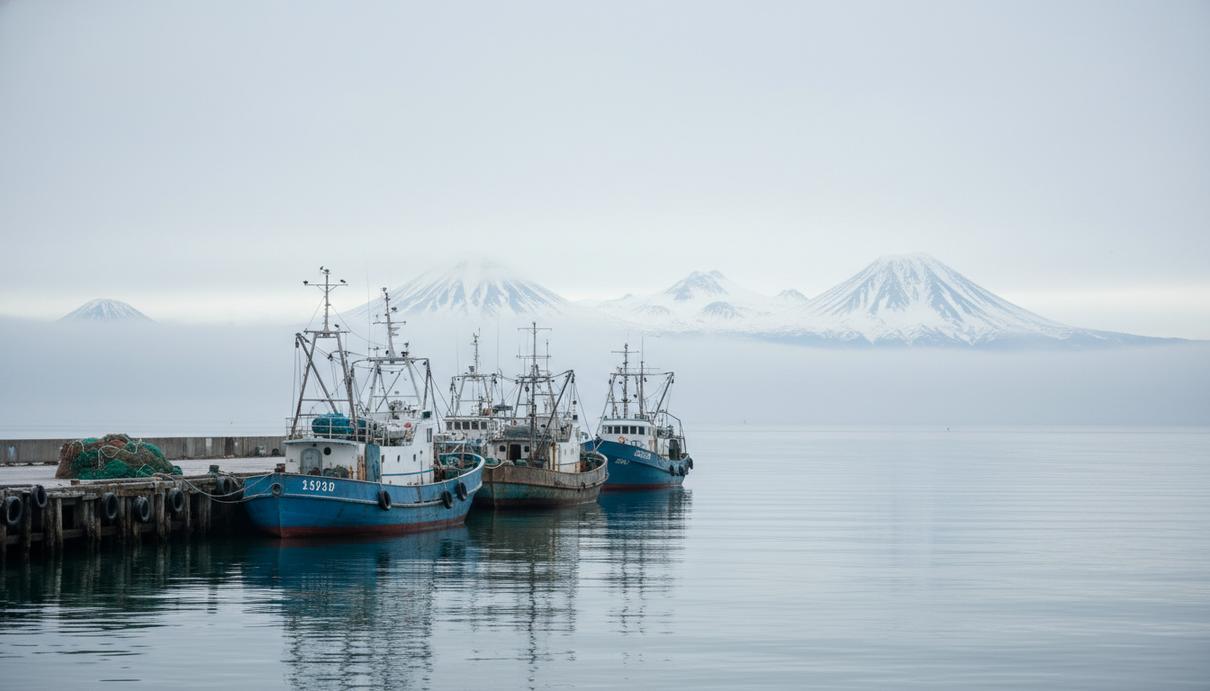
In a significant move set to reshape the economic landscape of Russia’s resource-rich Far East, fishing enterprises across the Kamchatka Krai and Chukotka Autonomous Okrug have completed the early re-registration of their crucial fishing plot contracts. These new agreements, cementing access to vital maritime resources for an extended 20-year period, were finalized ahead of schedule between September 2025 and June 2026. The Northeast Territorial Administration of Rosrybolovstvo reported a total of 841 contracts signed, with the vast majority, 817, concentrated in the strategically important Kamchatka region, signaling Moscow’s long-term strategic interest in this Pacific gateway.
This comprehensive re-licensing initiative, which required businesses to renew plots previously secured only until 2028, comes with substantial financial undertakings. The Russian budget system is poised to receive an estimated 100 billion rubles (approximately 1.1 billion USD) from these transactions, a critical injection of funds for the state. These payments are structured over several years, with an initial 7.297 billion rubles disbursed in 2025, an anticipated 22.198 billion rubles in 2026, and a projected peak exceeding 30 billion rubles in 2028. Notably, one-fifth of these proceeds is earmarked directly for regional budgets, ostensibly to bolster local development in these often remote territories.
Beyond direct financial contributions, a pivotal condition for the extension of these fishing leases was the mandatory signing of agreements committing enterprises to participate actively in the socio-economic development of the affected regions. This clause underscores the Kremlin’s aim to foster stability and ensure local engagement in the benefits derived from these lucrative natural resources, potentially mitigating social unrest and strengthening Moscow’s influence in the Far East.
While federal regulators champion this long-term consolidation of fishing plots as a guarantor of industry stability and predictable budgetary revenues for years to come, the practical implications for the fishing companies themselves present a more complex picture. For many enterprises, this ambitious campaign has translated into a sharp escalation of their debt burden, as they largely resorted to commercial bank loans to meet the substantial upfront payments required by the new contracts.
Data from Kamchatstat highlights the severity of this financial strain. By the end of 2025, the indebtedness of the region’s fishing companies, excluding small businesses, had already soared to an astounding 163 billion rubles (approximately 1.8 billion USD). Alarmingly, as of early 2026, the fishing sector alone accounted for a staggering 47 percent of the total credit obligations for all enterprises throughout the entire Kamchatka Krai, indicating a disproportionate concentration of financial risk within this critical industry.
Experts are now cautioning that this escalating debt load is likely to continue its upward trajectory in the medium term, potentially stifling crucial investment opportunities for local businesses. Such financial constraints could impede modernization efforts, hinder technological upgrades, and ultimately limit the industry’s competitiveness on international markets, posing a challenge to Russia’s broader economic strategy in its Far Eastern territories and its role as a global seafood supplier.