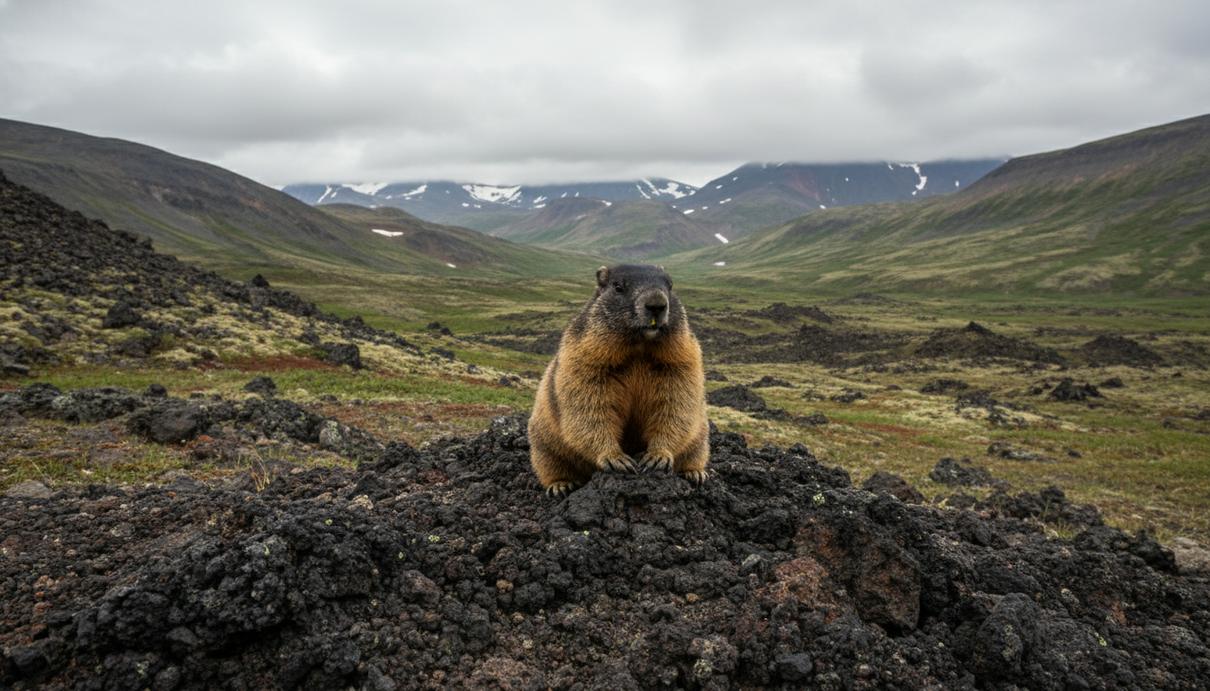
The federally protected black-capped marmot, a species designated for conservation across Russia, faces a perplexing legal paradox in the Kamchatka Krai. Despite its national endangered status, these unique alpine rodents remain a legitimate target for hunters within the region, a discrepancy rooted in their omission from Kamchatka’s local Red Book of threatened species. This unusual situation highlights a critical conflict between national conservation directives and regional legislative oversight, drawing attention from international wildlife advocates.
Regional authorities in Kamchatka justify continued hunting by citing the marmots’ natural resilience. The indigenous population traditionally inhabits some of the peninsula’s most rugged and inaccessible landscapes, including steep rock formations and ancient volcanic lava fields. This challenging terrain offers significant natural protection from predators, leading local environmental agencies to conclude that the marmot population is stable enough to sustain regulated hunting, thus continuing to issue licenses for their culling.
However, this regional assessment is strongly contested by conservationists, including representatives from the “Volcanoes of Kamchatka” Natural Parks network. They point out a critical flaw in this approach: federal environmental protection measures for the black-capped marmot are typically applied to specific geographic areas where the species is demonstrably endangered, such as the Baikal region. Kamchatka, despite hosting a significant population, was not specifically included in this federal designation. This omission creates a significant legal vacuum, which local hunters are actively exploiting. Critics further contend that the actual enforcement and monitoring of hunting quotas on the peninsula are severely inadequate, allowing for largely uncontrolled animal extraction.
Contrary to regional assurances, recent monitoring data indicates a concerning trend: the black-capped marmot population continues to experience a decline. A significant portion of their remaining habitat is located within the critical South Kamchatka Natural Park, an area increasingly vulnerable to escalating anthropogenic pressures. Beyond the direct impact of hunting, another severe threat emerges from unregulated tourism. Visitors to these protected areas frequently engage in the harmful practice of feeding marmots human food, which is physiologically incompatible with their digestive systems. This seemingly innocuous interaction often leads to illness, death, and the further depletion of fragile local marmot groups, exacerbating the species’ struggle for survival.
This complex situation in Kamchatka serves as a stark illustration of the intricate challenges faced in biodiversity conservation, particularly when national environmental mandates clash with regional legal interpretations and enforcement. It underscores the urgent need for a cohesive, scientifically grounded approach to protecting vulnerable species, ensuring that legal frameworks genuinely safeguard wildlife rather than inadvertently exposing them to continued threats. The fate of Kamchatka’s black-capped marmots now rests on resolving this critical policy divergence, a development closely watched by global conservation communities.