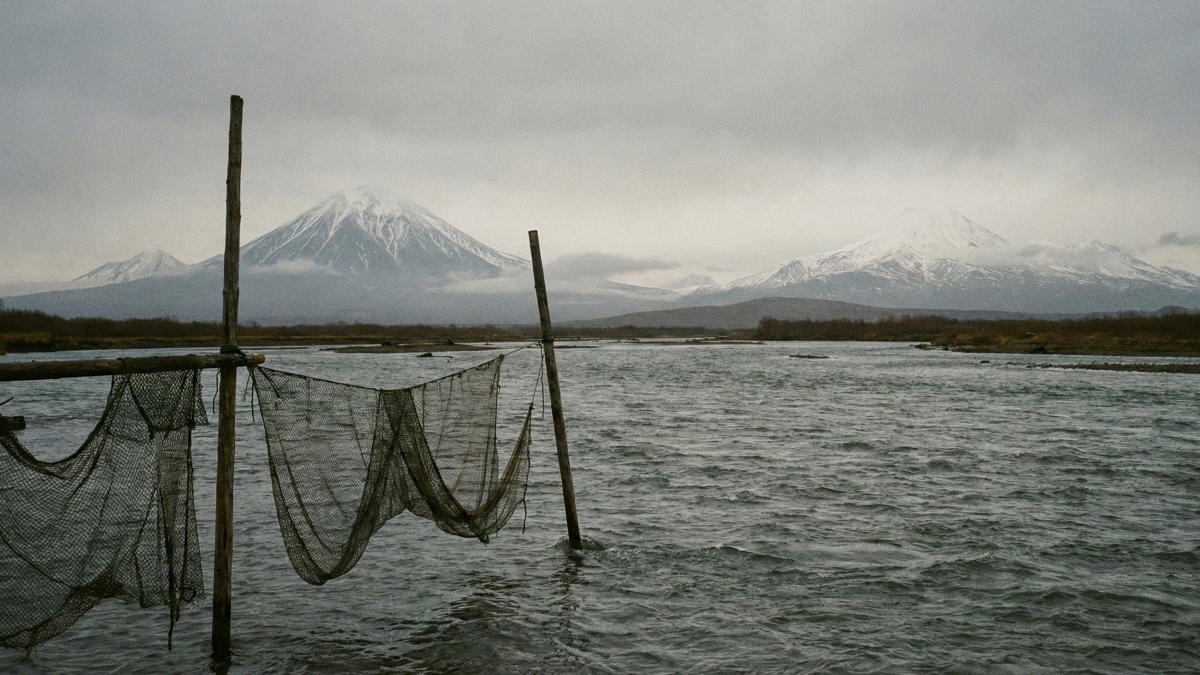
Kamchatka, Russia’s vital Far Eastern peninsula and a global powerhouse for wild salmon, is bracing for a profoundly challenging 2026 fishing season. Official forecasts released by the Kamchatka Fisheries Council paint a grim picture, projecting a significantly reduced harvest that could mark one of the lowest in recent memory. This sharp decline presents formidable economic and ecological hurdles for the region, renowned for its pristine waters and rich marine life.
Specialists anticipate an overall salmon catch of merely 122,400 metric tons for the upcoming year, a figure that starkly underperforms even previously designated “unproductive” seasons. By comparison, fishermen reeled in 134,500 tons in 2022 and 130,700 tons in 2024. Scientists warn that a more pessimistic scenario could see the total haul plummet further, potentially reaching a mere 108,000 tons. This stark prediction contrasts sharply with the unexpectedly robust 2025 season, which saw actual catches of approximately 259,000 tons, far exceeding the initial forecast of 199,200 tons. The current scientific consensus points to a cyclical downturn in salmon populations approaching the peninsula’s rivers.
The challenging outlook extends across Kamchatka’s diverse coastal areas. For the eastern shores, the projected catch ranges from 51,500 to 60,500 tons, with pink salmon expected to constitute a substantial portion, between 32,600 and 40,600 tons. The western coast faces an equally constrained forecast, with anticipated hauls varying from 56,600 to 61,900 tons; however, pink salmon approaches here are expected to be considerably more modest, estimated between 10,000 and 14,000 tons.
In response to these concerning projections, the Kamchatka Fisheries Council has outlined stringent regulatory measures aimed at preserving the dwindling salmon stocks and ensuring long-term sustainability. Among the proposed restrictions is a ban on industrial net fishing in the rivers of the western coast, to remain in effect until the commencement of the mass coho salmon run. This critical measure seeks to protect vulnerable populations during their crucial migration upstream.
Further adjustments are planned for traditional fishing practices, particularly in the Milkovsky district. A revised schedule proposes allowing fishing during three distinct one-week periods, with “passage days” mandated in between to ensure unimpeded passage for salmon migrating to their spawning grounds. These multi-faceted conservation efforts underscore a commitment to balancing the immediate needs of the fishing industry with the vital imperative of safeguarding Kamchatka’s invaluable salmon resources for future generations. The success of these measures will be closely watched by international observers and seafood markets alike.