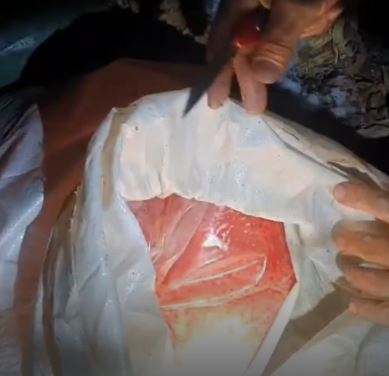
In a stark reminder of the persistent battle against illegal wildlife trade, anti-poaching units in Russia’s Far East have intercepted a significant haul of illicit salmon caviar following a dramatic discovery. On the remote western coast of Kamchatka, near the Right Kikhchik River, fish inspectors discovered an abandoned inflatable boat alongside sacks containing approximately 30 kilograms of coho salmon caviar. The perpetrators, reportedly engaged in clandestine fishing operations, managed to evade capture, leaving behind their valuable illicit cargo as authorities closed in.
The discovery, confirmed by the Territorial Department of the Federal Agency for Fisheries (STVU FAR), also included a homemade gillnet, often employed in illegal fishing. This incident underscores the lucrative nature of such operations, with the seized caviar alone representing an estimated damage exceeding 983,000 Russian rubles to the state. Coho salmon, a prized anadromous species, plays a crucial role in the delicate ecosystem of Kamchatka, a region globally renowned for its pristine wilderness and abundant salmon runs which are vital for local biodiversity and global fish stocks.
Illegal fishing and poaching remain a significant challenge across Russia’s vast territories, particularly in resource-rich areas like Kamchatka. The illicit trade in salmon caviar not only depletes wild fish populations—threatening the long-term sustainability of valuable marine resources—but also often funds criminal networks and undermines legitimate economic activities. Authorities frequently face well-organized groups willing to take substantial risks to exploit these valuable natural resources for profit, highlighting the complex nature of environmental enforcement.
Following the seizure, all abandoned equipment—the boat, net, and the high-value caviar—have been transferred for secure storage. An administrative protocol has been filed as investigations actively pursue the identification and apprehension of those responsible for this environmental crime. The case is now under consideration for potential criminal charges, reflecting the severity with which Russian authorities view such offenses and their broader impact on the nation’s natural heritage and international conservation efforts against illegal, unreported, and unregulated (IUU) fishing.