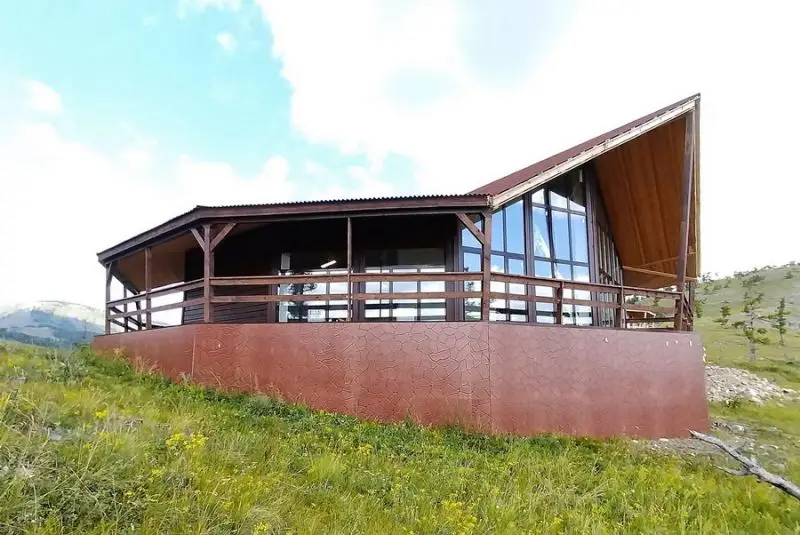
A new visitor center dedicated to the reintroduction of the Przewalski’s horse will open on September 10 in the Khakassky Nature Reserve. This facility marks the second center in Russia aimed at restoring the rare wild equine species to its historical habitats following its extinction in the wild.
Financial backing for the project was provided by VTB Bank – an initiative detailed during the 2026 Eastern Economic Forum by the bank’s Nature Defenders Fund. The visitor facility is located in the Kamyzak Steppe with Lake Ulukh-Kol section of the reserve. This area hosts a semi-wild population of Przewalski’s horses, where the animals inhabit a large, enclosed territory designed to closely replicate their natural environment. Eight wild horses currently reside at the center.
The center’s exhibition provides comprehensive information on the species’ reintroduction program, the Great Steppe ecological zone, and the evolution and history of the horses. It also covers the global efforts of reintroduction centers and the historical contributions of explorer Nikolay Przewalski. Interactive elements within the facility allow visitors to experience the natural scents of steppe vegetation and listen to native animal calls.
The broader species restoration program was initially announced at the 2025 Eastern Economic Forum. The successful reintroduction of the Przewalski’s horse serves as an operational model demonstrating that species extinct in the wild can be restored through coordinated financial planning, scientific research, and long-term habitat management. Initial progress in the Khakassia region includes the successful adaptation of the animals, the formation of two distinct social groups, and the birth of the first foals. The new visitor center is designed to communicate the scientific importance of these conservation efforts to the public.
Reserve management is currently focused on facilitating the ongoing adaptation of the horses, ensuring optimal conditions for reproduction, and securing the foundation for a self-sustaining population. The primary objective is to return the animals to their historical ecosystem rather than maintaining them in captivity.
Operating as part of a state-level species recovery program, the Khakassia facility follows the establishment of Russia’s first reintroduction center in the Orenburg region. The current population was relocated from the Orenburg reserves in October 2025 and subsequently divided into two family groups – each led by a single stallion. The first group includes the stallion Yoda alongside mares Marilyn, Tomar, Bariya, and Yelva, while the second group consists of the stallion Shaman with mares Alana and Taiya. Two mares successfully delivered foals in 2026.
Access to the visitor center, ecological trails, and viewing enclosures requires advance reservation. Due to the strict conservation status of the protected territory, visitor groups are strictly limited to a maximum of 20 individuals. Negotiations are currently underway to introduce a new group of Przewalski’s horses to the reserve – with potential sourcing partnerships being discussed with Mongolia and China.