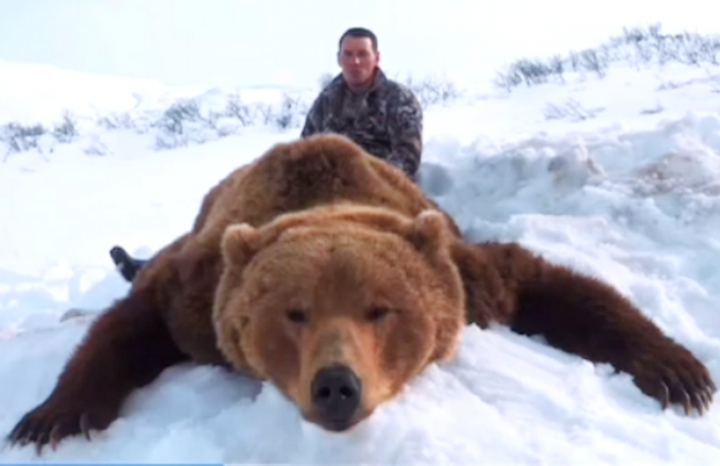
A dramatic encounter in Russia’s remote Kamchatka Peninsula has drawn attention to the raw and often brutal realities of nature, as professional hunters were forced to neutralize a large brown bear described as a “cannibal.” The animal exhibited extreme aggression following a disturbing discovery, prompting a swift and decisive response from the hunting party.
According to local reports from Kamchatka.Today, and further detailed by the “Real Hunting” community, the incident unfolded when hunters encountered the bear, later identified as a substantial male. The animal had reportedly unearthed a den, killing a female bear and her cub, burying their remains under the snow, and then fiercely guarding the grim site.
As the hunting party drew near, the predatory bear perceived their presence and immediately adopted an aggressive stance, signaling a clear intent to defend its gruesome cache. Faced with an imminent threat, the hunters dispatched the animal with two shots. Subsequent investigation of the area revealed the macabre scene: the remains of the sow and cub, confirming the bear’s predatory actions against its own kind.
While male brown bears are known to occasionally prey on cubs, especially to eliminate competition or induce a female to re-enter estrus, the specifics of this incident—including the apparent cannibalism of both a sow and her cub, followed by burial and defense of the remains—highlight a particularly brutal aspect of wilderness survival. Such behavior can sometimes be exacerbated by environmental factors or territorial disputes within bear populations.
The event occurs as Kamchatka’s brown bear population begins its annual emergence from hibernation. Sows with two-to-three-year-old cubs typically leave their winter dens by mid-April, when conditions become more favorable. However, mothers with newborn cubs often remain in their shelters until late May or early June, coinciding with the retreat of winter snows. This period of transition can heighten territorial conflicts and survival pressures among bears.
This season, spring bear hunting on the peninsula is permitted from April 11th until June 10th. The incident underscores the complex dynamics of wildlife management and human interaction in a region renowned for its dense bear population, reminding both residents and visitors of the unpredictable nature of these powerful predators in their natural habitat.