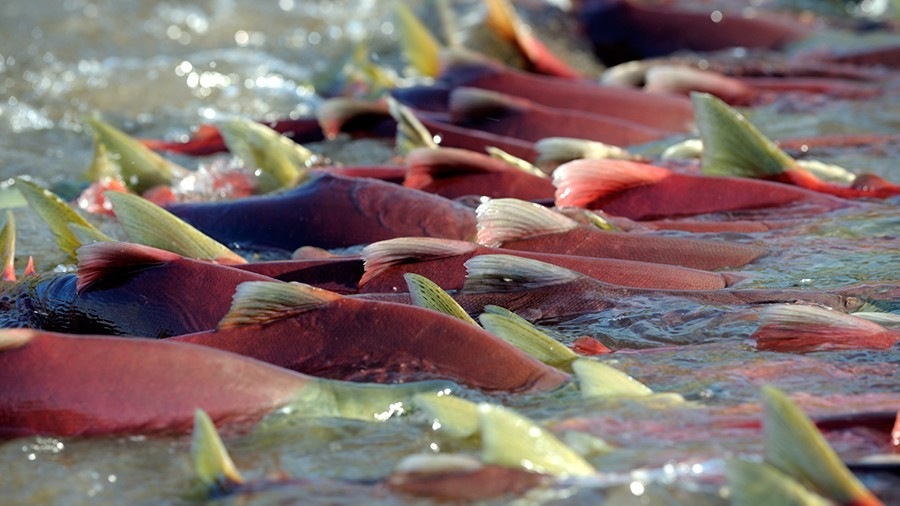
The ecologically vital Kamchatka Peninsula in Russia’s Far East is embarking on a comprehensive conservation program, backed by the Presidential Nature Fund, to safeguard its iconic Pacific sockeye salmon population. This ambitious initiative, aptly named ‘Ozernovskaya Sockeye – For Me, For You, For Us,’ is specifically designed to ensure the sustainable reproduction of this invaluable fish stock within the pristine Kurile Lake basin, a critical component of the South Kamchatka Federal Sanctuary and a designated UNESCO World Heritage site. The project adopts a holistic, systemic approach, intertwining robust protection measures with extensive educational outreach to local communities.
This undertaking holds immeasurable biological significance, underscored by the pivotal role sockeye salmon play in the region’s delicate natural balance. The Kurile Lake stands as the largest spawning ground for wild sockeye salmon in Asia, making its population a global benchmark and a vital indicator of the overall health of southern Kamchatka’s ecosystem. The stability of these salmon runs is directly linked to the survival of the formidable Kamchatka brown bear and the well-being of endangered raptors, including the majestic Steller’s sea eagles and golden eagles, firmly establishing the Ozernovskaya sockeye as the cornerstone of the food web for countless piscivorous species.
The project’s geographical scope extends beyond the aquatic boundaries of the sanctuary itself, encompassing adjacent areas that are critical spawning grounds, as well as the nearby settlements of Ozernovsky and Zaporozhye. Expert teams will operate across multiple fronts, with an immediate priority on intensifying protection regimes for key sockeye habitats. This involves bolstering state and municipal oversight to effectively combat poaching and illegal fishing. Concurrently, efforts will focus on enhancing the professional qualifications of environmental inspectors, equipping them with advanced skills to detect and prevent violations of environmental legislation.
An equally crucial facet of the initiative involves engaging actively with local communities and the burgeoning tourism sector. Organizers are committed to boosting environmental literacy among residents of Ozernovsky and Zaporozhye, fostering a deeper understanding of the importance of preserving wild salmon not merely as a natural resource, but as a foundational element of regional prosperity and cultural heritage. Special attention will also be dedicated to regulating tourist flows within the sanctuary and educating visitors about the fragile ecosystem of this unique peninsula.
Vsevolod Yakovlev, Acting Director of the Kronotsky State Reserve, lauded the timely support from the Presidential Nature Fund. He emphasized that this project secures the future of an entire region, especially as global attention increasingly converges on the unique natural complexes of the South Kamchatka Sanctuary, an integral part of Russia’s contribution to UNESCO’s World Natural Heritage. Yakovlev underscored the primary objective: to maximize control over vulnerable areas and forge a delicate balance between conserving wild nature, respecting the interests of local inhabitants, and promoting the sustainable socio-economic development of the Kamchatka Territory.
Throughout the program’s implementation, specialists from the Presidential Nature Fund will provide ongoing curatorial oversight and expert support to the Kronotsky Reserve. This collaborative framework is designed to ensure transparency, accountability, and the utmost effectiveness of the measures undertaken to protect the unparalleled ecosystem of Kurile Lake, setting a significant precedent for international conservation efforts.